YOUR CART
IS EMPTY
IS EMPTY

Have you ever noticed that the lifespan of tires tends to get "shorter" and shorter, according to the advice of tire shop owners, mechanics, managers, or garage owners, or service centers, all of whom have a direct interest in selling new tires? So what is the truth? What indicates that a tire is "worn out"?
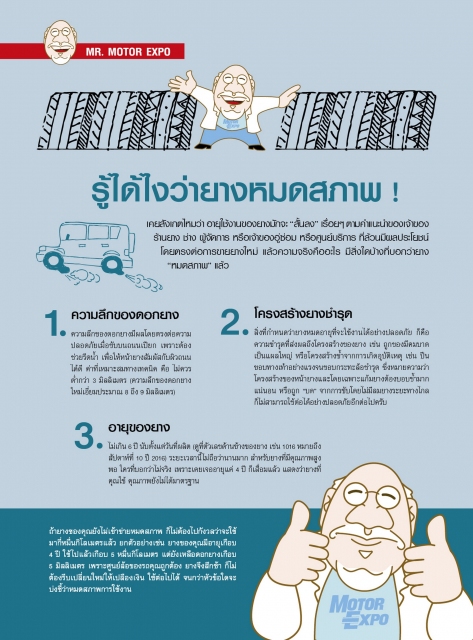
1. Tread Depth
Tread depth directly affects safety when driving on wet roads, as it helps to channel water away so that the tire surface can make good contact with the road. The technically appropriate value is not less than 3 millimeters (the depth of brand-new tire treads is approximately 8 to 9 millimeters).
2. Damaged Tire Structure
What determines that a tire is no longer safe to use is damage that affects the tire's structure, such as being cut by a sharp object resulting in a large wound, or structural bruising from an accident, such as forcefully climbing a curb until the rim is damaged, which means the structure of the tire's surface and especially the sidewall must be severely bruised. Or if it has been "ground" by driving a long distance without air pressure, it can no longer be used safely.
3. Tire Age
No more than 6 years from the date of manufacture (look at the numbers on the side of the tire, e.g., 1016 means week 10, year 2016). This period is not considered very long for tires of sufficiently high quality. Anyone who says this is not true because they have encountered tires that deteriorated at just 4 years old, it means the quality of the tires you are using is not up to standard.
If your tires do not yet fall into the category of being worn out, there's no need to worry about how many tens of thousands of kilometers they've been used. For example, if your tires are almost 4 years old and have been used for nearly 50,000 kilometers, but still have almost 5 millimeters of tread remaining because your car's wheel alignment is correct, causing the tires to wear slowly, there's no need to rush to replace them and waste money. You can continue to use them until any of the points indicate that they are no longer suitable for use.
Source Formula www.autoinfo.co.th
Related Articles>:
> "Tires": Do all four tires have to be the same brand?
> "New Tires" Should Always Be Placed on the Rear Wheels


Follow Motor Expo Club Network