YOUR CART
IS EMPTY
IS EMPTY

Every year, we see new concepts being presented. Some concepts are extensions of familiar things, and occasionally we see groundbreaking innovations, as is called in English, RE-INVENTING THE WHEEL, which means “creating a new car wheel.”
“Creating a new car wheel” is a very challenging phrase, as it is well known that the “wheel” (WHEEL) as we know it, was invented in ancient times, thousands of years ago, dating back to the Neolithic era when solid wooden wheels were invented for pottery making, eventually developing into wheels for chariots and carts.
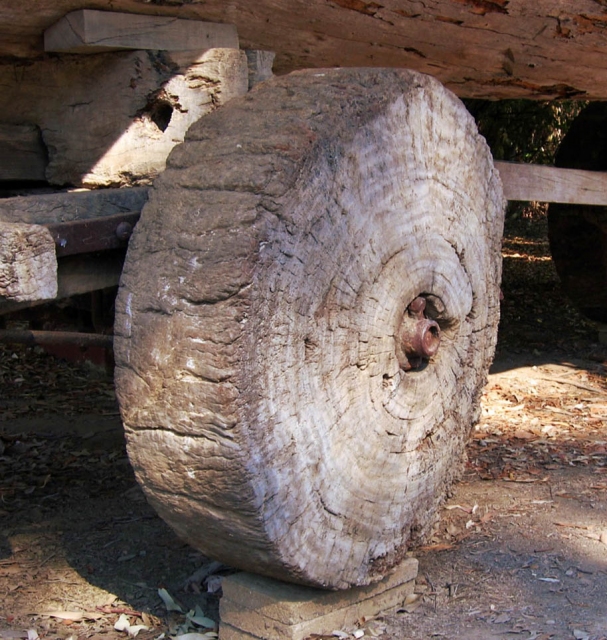
Even if wheels were made from solid wood, or with spokes, or even metal, they still retained the original concept: being a circular object that rotates (ROTATE) around an axle (AXEL), and no matter how much time has passed, the original principle remains.
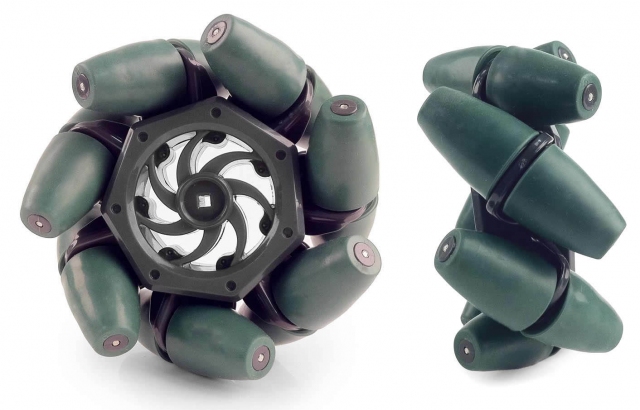
But human endeavors are endless, as seen in the innovation of the Mecanum wheel system, which arranges rollers around an axle at a 45-degree angle to the axle's rotation. This involves the coordinated action of both the rollers positioned around the axle and the rotation of the main shaft simultaneously. With this unusual design, it has been developed into wheels for robotics and used as wheels for “forklifts” (FORK LIFT) in industrial applications. This is because vehicles equipped with Mecanum wheels can instantly change their direction of travel freely by 90 degrees and can also rotate easily on the spot, thanks to the coordinated operation of independently driven wheel axles and numerous rollers. (It is recommended to watch an animated video on YouTube to better understand its operation).

Not long ago, in the blockbuster film “Star Wars,” episode “The Force Awakens” (STAR WARS: THE FORCE AWAKENS), we saw a concept that questioned whether the “wheel” still had to be a round object rotated around an axle as before. This was seen through the operation of the BB-8 robot. Before the BB-8 robot was released for sale, there were various speculations about what mechanism lay beneath its spherical shape. Ultimately, it was revealed that inside, it has a driving wheel that works with its outer shell, along with a magnetic system that keeps the robot's head attached to its body.
The interesting principle of the BB-8 robot likely influenced and spurred the tire industry giant, Goodyear, to significant innovation. Goodyear has introduced a groundbreaking new concept that not only changes the appearance and design thinking for wheels and tires but also leads to new ideas for future automobile development.
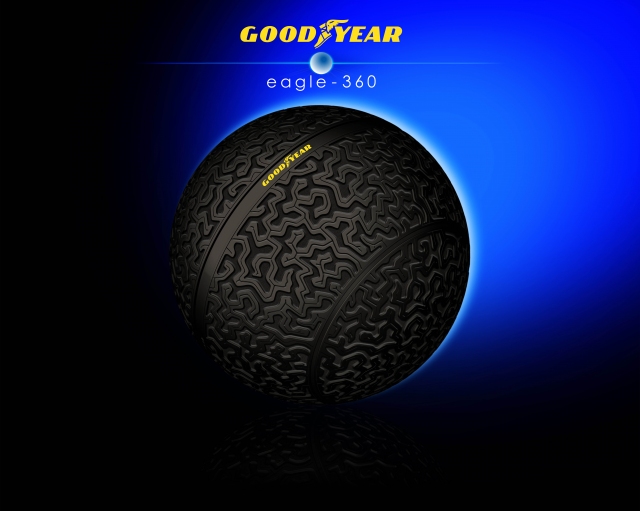
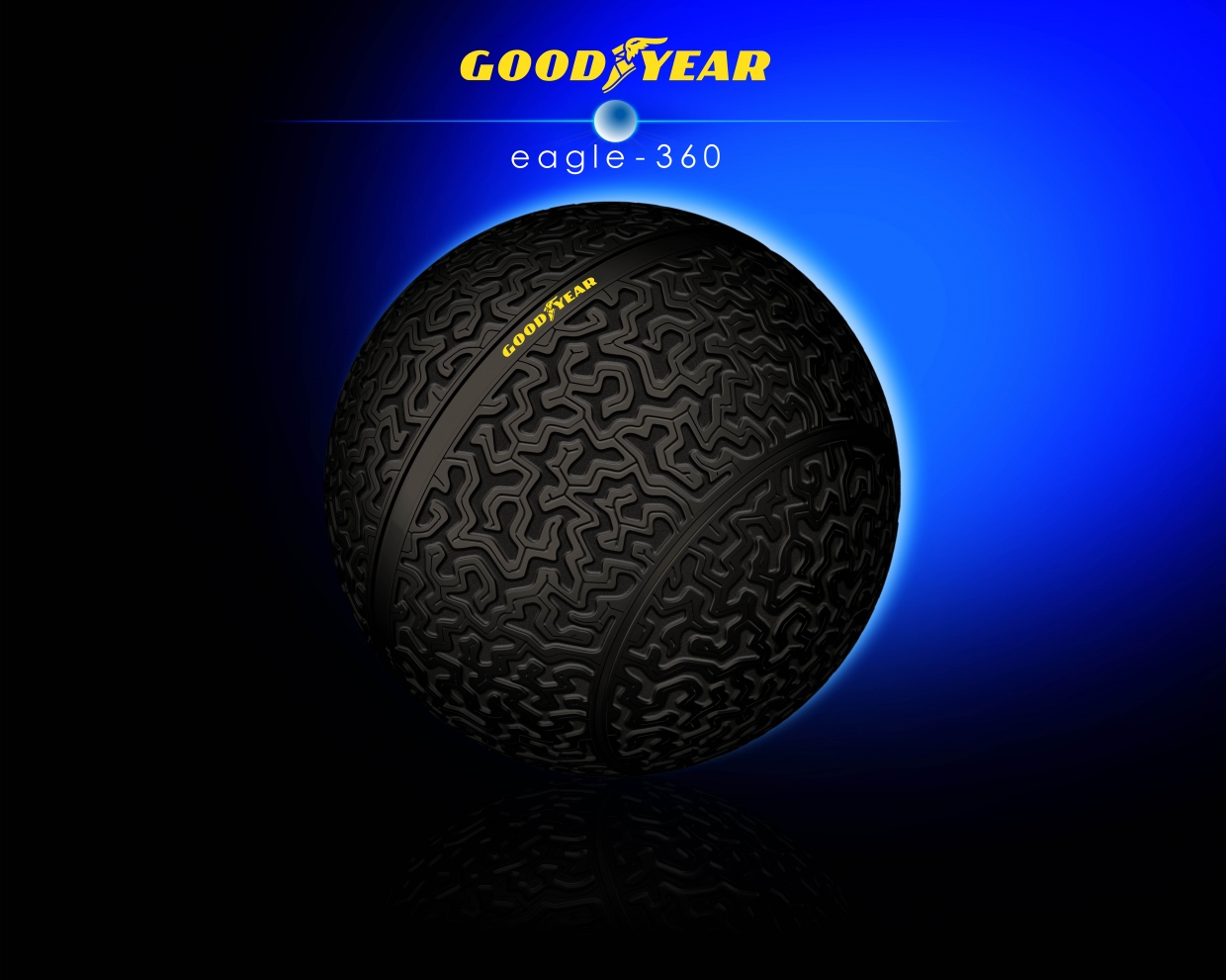
Goodyear's new concept is named “Eagle 360.” It is a spherical ball-shaped tire, living up to its name 360, which refers to 360 degrees or perfect roundness. It is designed for future autonomous vehicles.
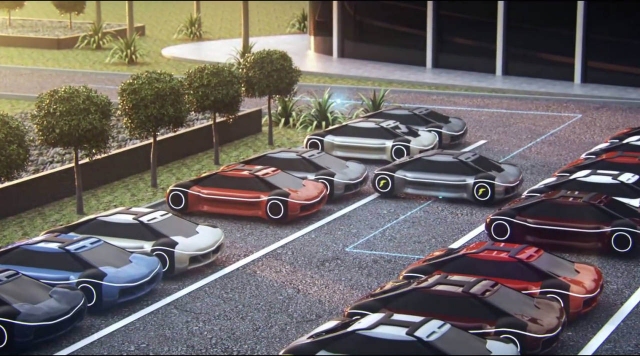
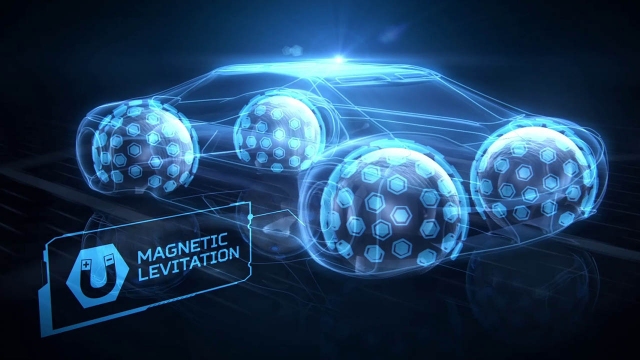
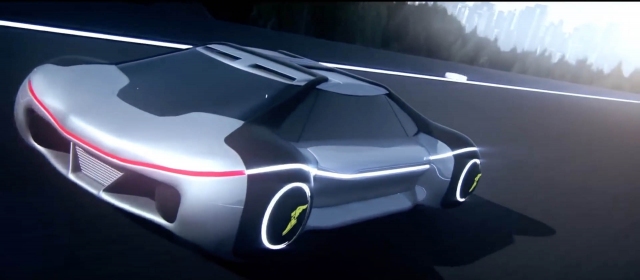
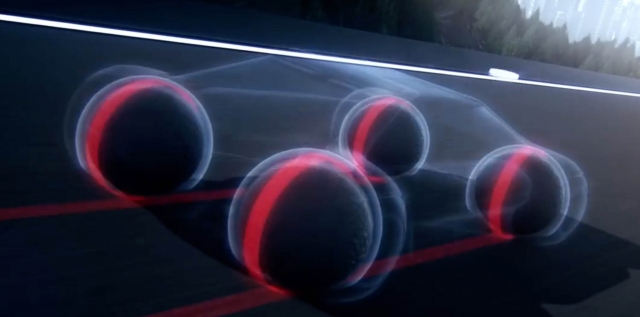
The Eagle 360 system operates under an electromagnetic system. The wheels and tires will not be connected to the vehicle body, which will float separately from the wheels under a magnetic field, or MAGLEV (MAGNETIC LEVITATION), similar to magnetic levitation trains. The propulsion comes from high-power electric motors inside the spherical wheel units, just like the BB-8 robot.
This concept instantly renders mechanical steering systems, suspension systems, coil springs, shock absorbers, air bags, etc., obsolete. This is because the magnetic field system makes the ride smooth and soft, like a magic carpet. And because the wheels are not fixed to any axle, turning and changing lanes are completely different from current automobiles. Turning in the Eagle 360 system will involve the entire vehicle moving sideways (FLUID LATERAL MOVEMENT). When combined with autonomous driving systems, it will make parking easy, eliminating the need to account for turning angles. The vehicle can easily enter and exit parking spaces (allowing for more parking spaces in the same area), in the same way we can see in the Mecanum wheel system.
Another aspect is long lifespan. Because the Eagle 360 system allows the tire to be used on all sides, it is programmed to automatically check the tire's condition. When heat or wear is detected at the currently used angle, it will automatically command the tire's rolling direction to shift to another position when the car is parked, thus extending its lifespan. Furthermore, there is no longer a need to inflate the tires, as they are replaced by foam, and the load support is handled by the magnetic levitation system, eliminating the problem of flat tires.
Goodyear's team believes that the tread patterns for the Eagle 360 system should be designed differently depending on the terrain where they are used. For example, the prototype was developed in the context of rainy England, leading to an all-terrain tire style pattern inspired by brain coral, created using 3D printing.
However, beneath this familiarity lie advanced concepts, such as tire grooves inspired by nature, developed with a special sponge-like structural material that can quickly contract when it comes into contact with water. This makes the tread grooves larger, allowing for rapid water displacement. And on dry roads, the grooves adapt to become stiffer, preventing the tire tread from deforming and helping to maintain excellent stability during travel.
And certainly, when all four wheels are not fixed to the car body and can roll freely, traditional problems like hydroplaning (tire skidding when driving through water) can be solved by computer commands to automatically change the rolling angle, maintaining the forward direction of travel as if a rally driver were in command. This is a highly interesting concept.
Furthermore, the Eagle 360 concept can also send information to other cars using the same system, providing alerts about the road conditions. This allows subsequent cars to adjust their driving conditions in advance, increasing safety.
After watching the video created by Goodyear, you will understand that it is truly one of the turning points in automotive innovation.
Source: In-depth car knowledge "Formula" Pattarakit Komolakiti formula@autoinfo.co.th


Follow Motor Expo Club Network