YOUR CART
IS EMPTY
IS EMPTY

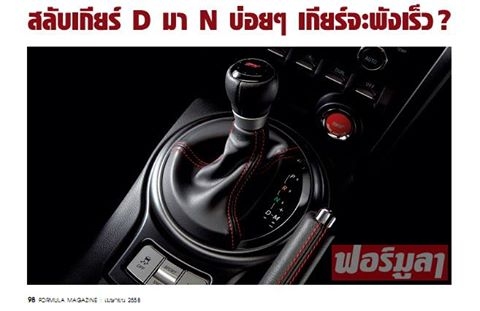
They say so...is it true?
•We promised that time! https://goo.gl/upeKi2 For those who want to know, let's check the accuracy and credibility of this matter together.
They say... : For an automatic car, when stopped at a red light, you should keep your foot on the brake in D gear, because if you frequently shift from D to N, the gearbox will break quickly...is that true?
❌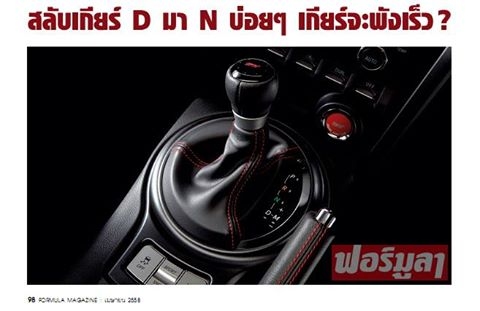
Not true : General automatic transmissions are designed to be shifted between various positions hundreds of thousands of times without breaking. So, no matter how often you shift from D to N, the gearbox can handle it easily. In cases where the car is stopped at a red light for a long time, it is best to shift to neutral (N) every time and engage the handbrake.
"When stopped at a red light... we can shift to N at any time, and if you're unsure if the car will roll on an incline, just pull up the handbrake and keep it engaged."
Lately, I've seen many online articles about using automatic transmission while stopped at traffic lights, and both old and new car experts, including "know-it-alls", have enthusiastically answered these questions, such as: "Keep your foot on the brake; frequently shifting between D and N will cause the gearbox to break sooner." Some say: "If stopped at a red light for more than 30 seconds, it's better to shift to N and engage the handbrake. Keeping it in D and pressing the brake is dangerous." But the scariest is: "If traffic is not stuck for long, leave it in D and pull the handbrake up high instead of pressing the brake." Let's look at the accuracy and credibility of this matter.
In the case of leaving it in D gear with the brake pressed, whenever the air conditioner compressor cycles on and off, the engine RPM will fluctuate due to idle speed compensation, causing the car to have increased torque (especially for diesel engines). At this moment, if we don't press the brake hard enough, the car has a chance of moving forward and bumping the car in front. In this case, changing the gear from D to N and engaging the handbrake is likely the safest, and it also helps save fuel.
Regarding the statement that frequently shifting between D and N will cause the gearbox to break quickly? If you think this way, please change your mind. Car manufacturers design and test these parts hundreds of thousands of times to ensure they won't have problems during actual use. Some old cars over 20 years old have never had their automatic transmission repaired. So if the gearbox breaks, it's more likely due to other causes, such as aggressive acceleration from a standstill, choosing an inappropriate gear for the speed, or not changing the transmission fluid as scheduled.
In conclusion, when stopped at a red light or stuck on any road in the world, we can shift to N at any time, and if you're unsure if the car will roll on an incline, just pull up the handbrake and keep it engaged. All of this depends on individual behavior, but above all, safety must be the primary concern.
Cr. Column: They say so...is it true? Formula


Follow Motor Expo Club Network