YOUR CART
IS EMPTY
IS EMPTY

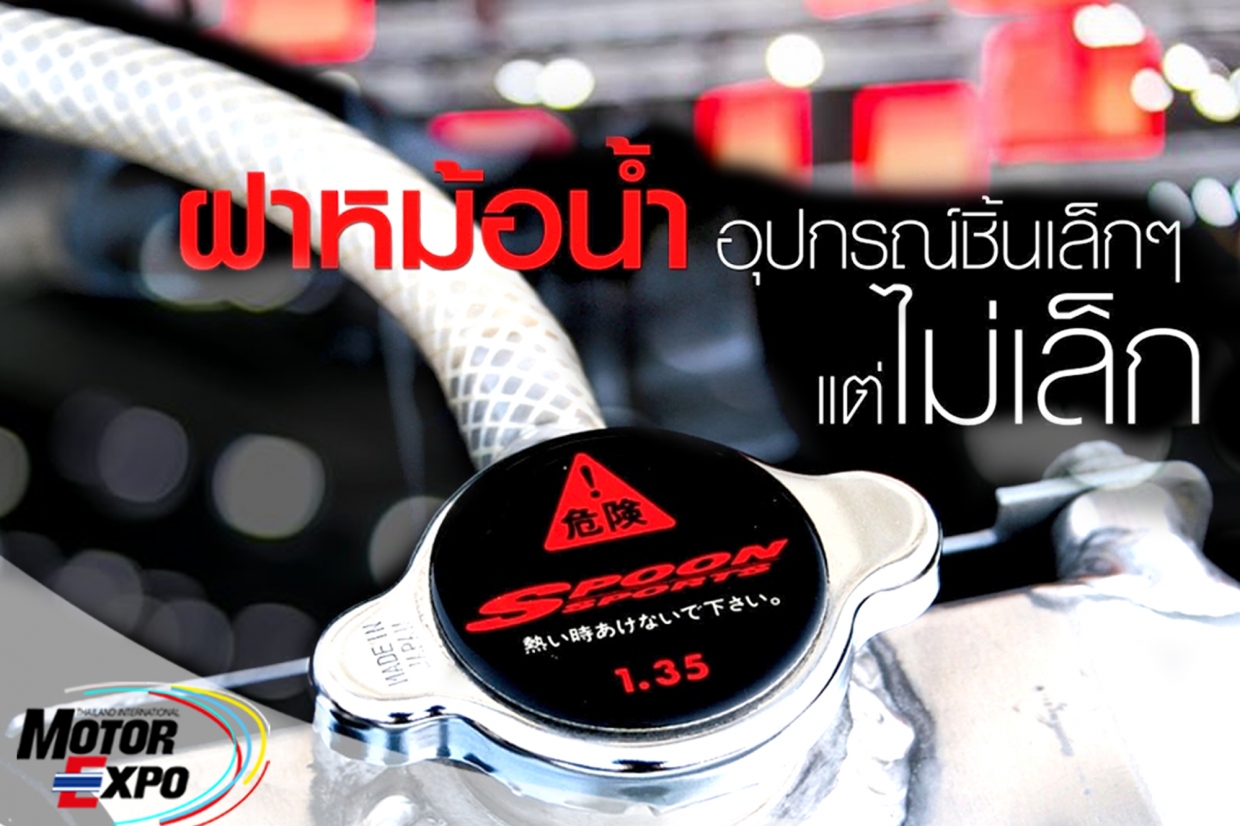
A radiator cap is not a brand-specific part from car manufacturers, but a commonly available cap that can be used with various car brands. Its pressure unit may be in pounds per square inch (psi), which is the same unit we use to measure tire pressure. Values are usually in the double digits, such as 12 to 14 psi.
If it's a model-specific cap from a car manufacturer, this unit is not used. The numbers we find will be of two types. The first type has single-digit values, such as 1.0 or 0.9, and may not have a unit specified. These values are pressure values in bar (BAR).
Therefore, the pressure value specified on the radiator cap means that the radiator cap's spring will control the pressure in the engine's cooling system, preventing it from exceeding this value. When the pressure rises to the specified value, the spring force cannot withstand the pressure, and thus allows some water or air to pass through. A pressure of 1 bar is approximately 14.5 psi or about 1.02 kg/sq cm.
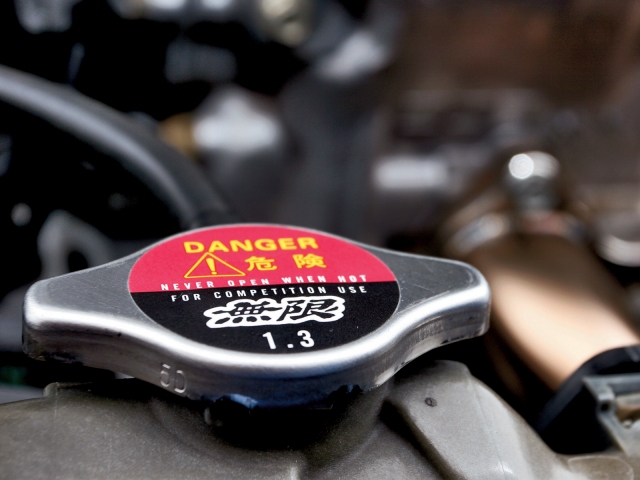
This pressure value in bar is also used by many European countries to specify tire pressure. If you find this value on a sticker near the car door frame, multiply it by 14.5 to get the tire pressure value in psi, which we are familiar with.
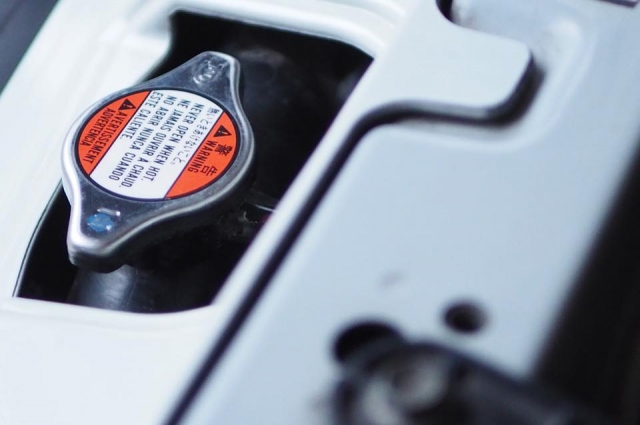
What's a bit unusual are the three-digit numbers on the radiator cap, such as 100 or 120. These numbers are also pressure values, but their unit is KPA or kilopascal. Often, it's not specified what the unit is. Therefore, if you see numbers around 100, conclude that they refer to kilopascals, for example, 120 means 120 KPA or 120,000 PA (one hundred twenty thousand Pascals). The name Pascal is given in honor of the Frenchman PASCAL, perhaps because it was unknown what else to call him, as PASCAL excelled in many fields, including physics, mathematics, and philosophy.
It has been internationally standardized that 100,000 PA equals 1 BAR (pronounced bar). PA is therefore a very small unit, so to avoid having to write too many zeros, it is common practice to first multiply by 1,000 to get KPA (kilopascal), similar to kilograms that we are well familiar with. Therefore, 1 BAR is exactly equal to 100 KPA and approximately 14.5 psi, because in reality there are many more decimal places, but they are not necessary for the rough values in our cars.
For the latest car models in some countries, we will find that the pressure value on the radiator cap can be as high as 140. When you multiply 14.5 and then divide by 100, you get a pressure value in psi of approximately 20.3 psi, which is a very high number for the pressure exerted on the radiator and the entire hose system. Therefore, the hoses of cars using these newer high-pressure radiator caps must have a very strong structure to withstand this level of pressure. Those who prefer cheap aftermarket parts can now understand why their hoses swell up and burst within just 2-3 months.
● So why do car manufacturers all use these high-pressure radiator caps?
Because the radiator's function is to dissipate heat from the water into the outside air. The heat in the water is the heat released from the combustion of fuel in the combustion chamber. A radiator that dissipates heat well must be made of materials that are good heat conductors and must have a large surface area, both on the side that contacts water and the side that contacts air. Therefore, a radiator with a large surface area must be large in size, or have sufficient thickness, which naturally takes up considerable space and adds significant weight. Both of these characteristics may not be suitable for modern sedans that have aerodynamic bodies and light weight for fuel efficiency. The front end of new car models, which tend to become flatter, forces the radiator to also become smaller.
When the size is restricted, it means that the surface area for heat dissipation must also decrease. Engine designers therefore have to find other solutions. If we look at the heat transfer formula, we will find that it also depends on the temperature difference. To compensate for the radiator's size, we need to make the water temperature as different as possible from the outside air temperature passing through the radiator, which means we need to make the water in the cooling system hotter.
● To make it easier to visualize
Compare it to draining water. If we want to drain water from the first tank to the second tank, the first thing is that the water level in the first tank must be higher. And if we want the water to drain quickly, we need to use a large pipe connecting the two tanks. But if the size of this pipe is limited (similar to the size of the radiator), we can still increase the transfer rate or flow of water by raising the water level in the first tank even higher than before (similar to increasing the temperature of the water in the engine). However, hotter water will easily reach its boiling point. To make it harder to boil, physics textbooks state that it must be under higher pressure. This is the origin of the high-pressure radiator caps in the new car models we use today.
A side effect of increasing water temperature is that other parts of the engine will also heat up, which means a slightly higher engine efficiency, i.e., reduced fuel consumption. The latest high-pressure radiator caps have a maximum value of 200 KPA or approximately 29 psi, which is a very high value. If any car user has a radiator cap with such a high pressure value, be careful not to let an unqualified mechanic install fake hoses for you. Rest assured that your hoses will swell up and definitely burst on the road.
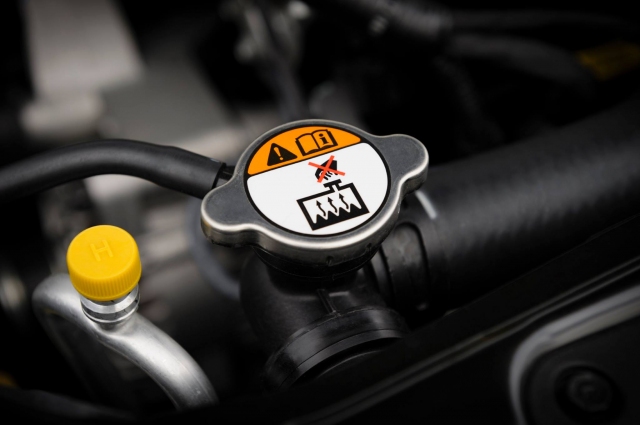
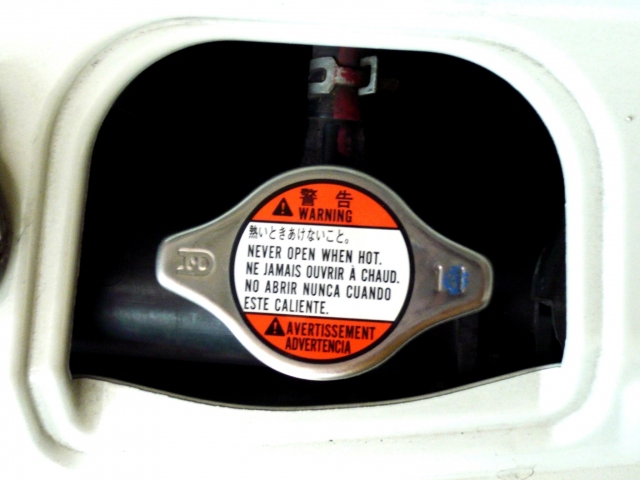
● Radiator cap indicates precautions!
When opening the cap to check or add water, do not do so while it is still hot, as the water pressure could cause injury. The correct procedure is to check and add water at the reservoir instead.
Causes of abnormally high engine temperature leading to boiling water can also come from the 'radiator cap', such as the small rubber gasket at the bottom of the radiator cap becoming worn out, hardened, brittle, or torn. Or it could be due to a dirty, rusty radiator, causing the valve and spring to rust. These causes can lead to engine damage. Therefore, the condition of the radiator cap should be regularly checked when the engine is cold.
● When is it necessary to change the 'radiator cap'?
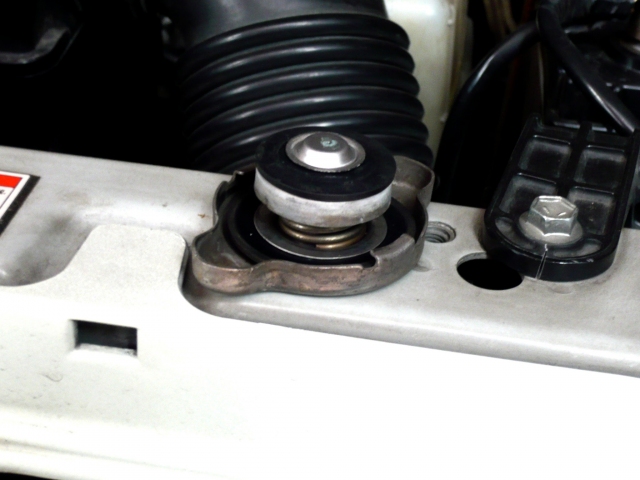
If you observe that the radiator cap has been in use for a long time, or if you frequently find that the water in the radiator dries up, but the water in the reservoir doesn't decrease, try opening the radiator cap (when the engine is cold) and turning it over. You will see the vacuum valve at the center (it's round, usually orange). Try to grasp and pull it. If it's very stiff, won't pull out, or doesn't move at all, it means the vacuum spring is seized, preventing the vacuum valve from opening. In this case, replace the radiator cap immediately. Or if it's damaged or torn, it should be replaced every 3-4 years or every 40,000-50,000 kilometers. It is best to buy a genuine radiator cap from the company or one of equivalent quality, because the radiator cap has a rubber seal on the inner seating edge which has a lifespan of around this duration. After that, it will deteriorate and will no longer be able to prevent water from leaking out of the radiator. Alternatively, the springs, both the high-pressure spring and the vacuum spring, when exposed to heat for a long time, will lose their rigidity, which may cause too much water to flow out of the radiator or prevent it from being drawn back into the radiator.
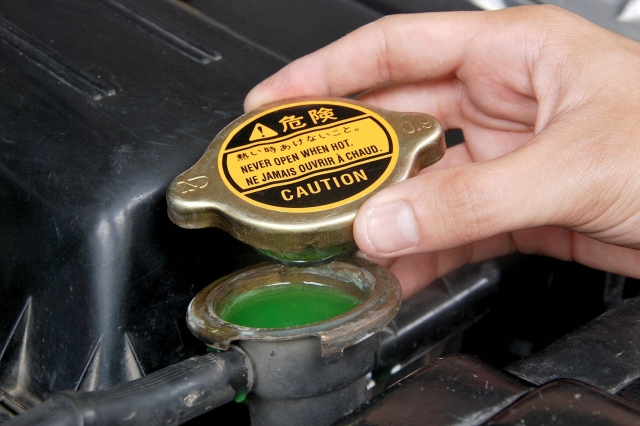
And if you check for water stains around the underside of the radiator cap, and find that the water level in the radiator is frequently low, but the water in the reservoir and the vacuum valve (when pulled) are normal, it might be due to a leak from the hardened rubber seal of the radiator cap, causing water to leak. If water stains are found, replace the high-pressure cap immediately as well.
All of the above should be checked every 1-3 months, and if the radiator cap is more than 2 years old or has been used for over 30,000 kilometers, it should ideally be checked weekly.
Watch a clip on how the radiator cap works
Source :
Article "Formula" / mazdaclubthailand


Follow Motor Expo Club Network