YOUR CART
IS EMPTY
IS EMPTY

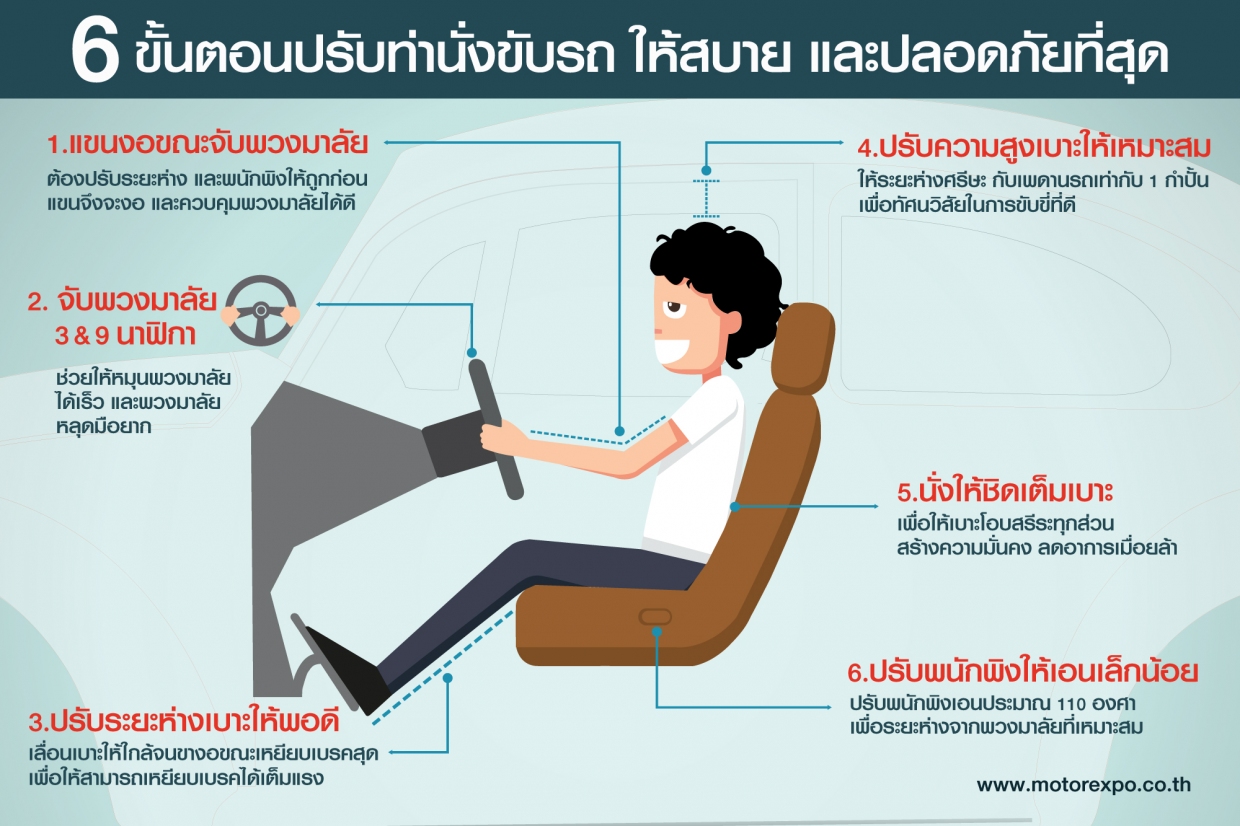
The correct driving position is very important because, in addition to reducing fatigue while driving, it also helps the driver control the car best when encountering unexpected situations that require quick responses. Let's see what steps are involved in adjusting your driving position correctly.
Start by moving your back, hips, and thighs as close to the inner part of the seat as possible, so that the seat supports all parts of your body. This helps reduce fatigue and creates stability while driving. Not sitting fully in the seat will cause back pain.
Adjust the seat height so that there is a distance between your head and the car's ceiling equivalent to one fist or the width of your palm, to ensure proper driving visibility, and slightly raise the front edge of the seat. Adjusting the seat too low or too high will result in poor visibility and difficult car control.
Adjust the seat distance so that your knees have a slight bend when the brake pedal is fully depressed, to allow full depression of both the brake and accelerator. This helps reduce injury in case of a frontal collision. Do not adjust the seat too far back until your legs are straight, as this will make braking awkward and lead to severe injuries in a collision.
The backrest should be reclined slightly, approximately 110 degrees, to maintain an appropriate distance from the steering wheel, making it easier to control the car. Leaning back while driving not only impairs car control but also causes unnoticed back fatigue and stress from having to strain to see the road more than usual.
The best position for holding the steering wheel is at 3 and 9 o'clock, and no higher than shoulder level, because it allows for the quickest steering wheel rotation, makes it harder for the steering wheel to slip, and reduces shoulder fatigue. Never hold the steering wheel with one hand or turn it by hooking or palming, as the steering wheel may slip and you could lose control of the car.
Once the distance and backrest have been adjusted as recommended, the correct way to check the distance is to straighten your arm and place it on top of the steering wheel. The correct distance is when your wrist can rest comfortably on the steering wheel while your body is still against the seat. If it's not yet correct, adjust the steering wheel in/out until you get the desired distance. When you lower your hands to the actual grip position, your arms will have an appropriate bend, allowing for good steering control.
Adjusting your seating position as recommended will make it easier for drivers to control the car in all situations, help reduce fatigue in various parts of the body, and consequently reduce stress while driving. For some, it might feel uncomfortable at first, but after adapting, you will find that the correct driving position greatly increases driving confidence.


Follow Motor Expo Club Network