YOUR CART
IS EMPTY
IS EMPTY

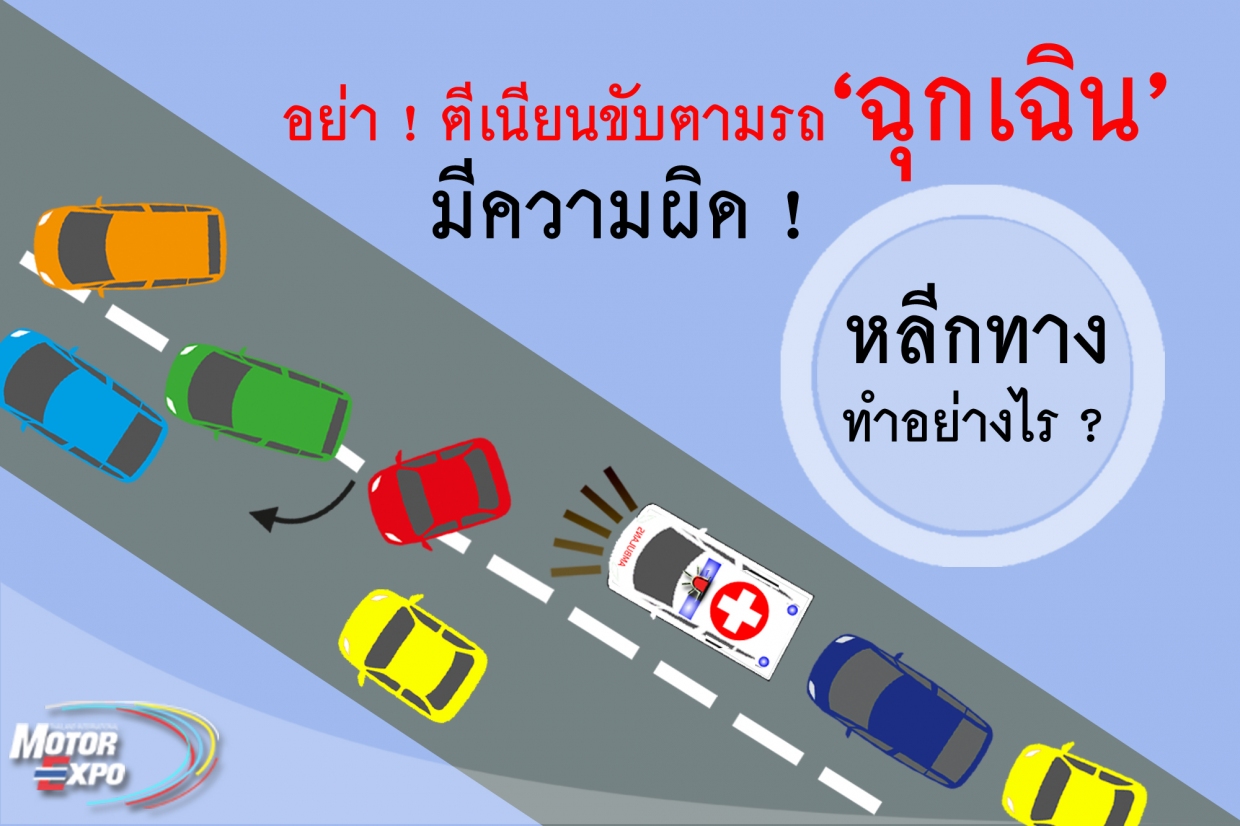
Many people have probably been in a situation where they were driving on the road, saw an emergency ambulance, but didn't know how to give way to it. Some people (perhaps new drivers) panic when they hear the siren of an emergency ambulance and are unable to control their car to give way. The National Institute for Emergency Medicine (NIEM) has compiled guidelines for giving way to emergency ambulances internationally, which should be practiced as follows:
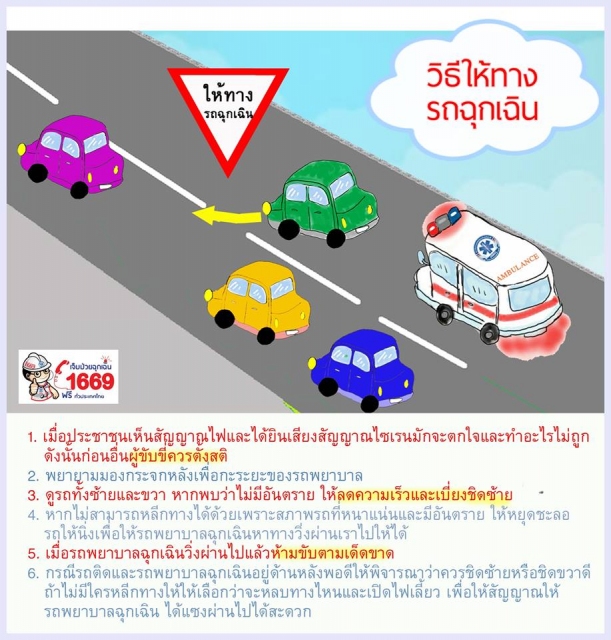
1. When you see the flashing lights and hear the siren, do not panic. Drivers should remain calm.
2. Try to look in the rearview mirror to estimate the distance of the approaching ambulance.
3. After considering the volume of cars to your left and right that are nearby, and find that there is no danger and you can move to the far left, drivers should reduce speed and move to the left immediately to give way to the ambulance.
4. If you cannot give way due to heavy and dangerous traffic conditions, then stop and slow your car to a standstill, to allow the emergency ambulance to find a way to pass you.
5. Once the emergency ambulance has passed, absolutely do not follow!
6. In case of traffic congestion and an emergency ambulance is right behind you, consider whether it's better to move to the left or to the right. If no one else is giving way, the driver should choose which way to move and use the turn signal to signal and allow the emergency ambulance to pass conveniently.
Furthermore, according to the Land Traffic Act B.E. 2522, Section 76, regarding the rights and duties of road users, pedestrians, towards ambulances, drivers must move and immediately clear the left side of the road surface upon hearing the siren or seeing the flashing lights. Failure to comply will result in a fine not exceeding 500 Baht.
Furthermore, ambulance drivers themselves must strictly adhere to traffic laws without exception, and when requesting passage, must use the correct signal lights.
In cases where an emergency vehicle requests passage, drivers on the left side should move to the left. If on the right side, move to the right. Move as close to the shoulder as possible to allow the emergency vehicle to pass conveniently. Even if the ambulance does not have a patient inside, it might be on its way to pick one up.
But there are still some thoughtless people (Currently, these "piggybackers" are still seen.)... When an emergency vehicle passes, they often like to piggyback, driving closely behind it. This kind of behavior, 'Stop it!' is considered inexcusably wrong.
Furthermore, the Land Traffic Act clearly states that drivers are prohibited from following emergency vehicles within a distance of at least 50 meters. Therefore, anyone who thinks of piggybacking, being thoughtless, taking advantage, thinking that by following an emergency ambulance they won't have to face traffic like other cars, let it be known that if traffic police officers see you, you will certainly be caught and fined.
Don't forget! The social media world is fast. Even if the law might not immediately catch you, almost everyone on the road now has dash cameras. Who knows, one day your car might be featured online, showcased for people to "praise" and "admire" you (sarcastic tone).
So, for such a small matter, let's cooperate a lot. When you see an emergency ambulance coming from behind, or just hear an emergency siren, look for the source of the sound and the siren lights or flashing lights, to be prepared. Move a little, pull over a bit, give way to let the emergency ambulance pass us first, because the patient in that ambulance... that moment could be “the minute of life” for someone in that vehicle.
In case of medical emergency, call the National Institute for Emergency Medicine - NIEM at 1669
Thanks for the good clip from Bank of Ayudhya


Follow Motor Expo Club Network