YOUR CART
IS EMPTY
IS EMPTY

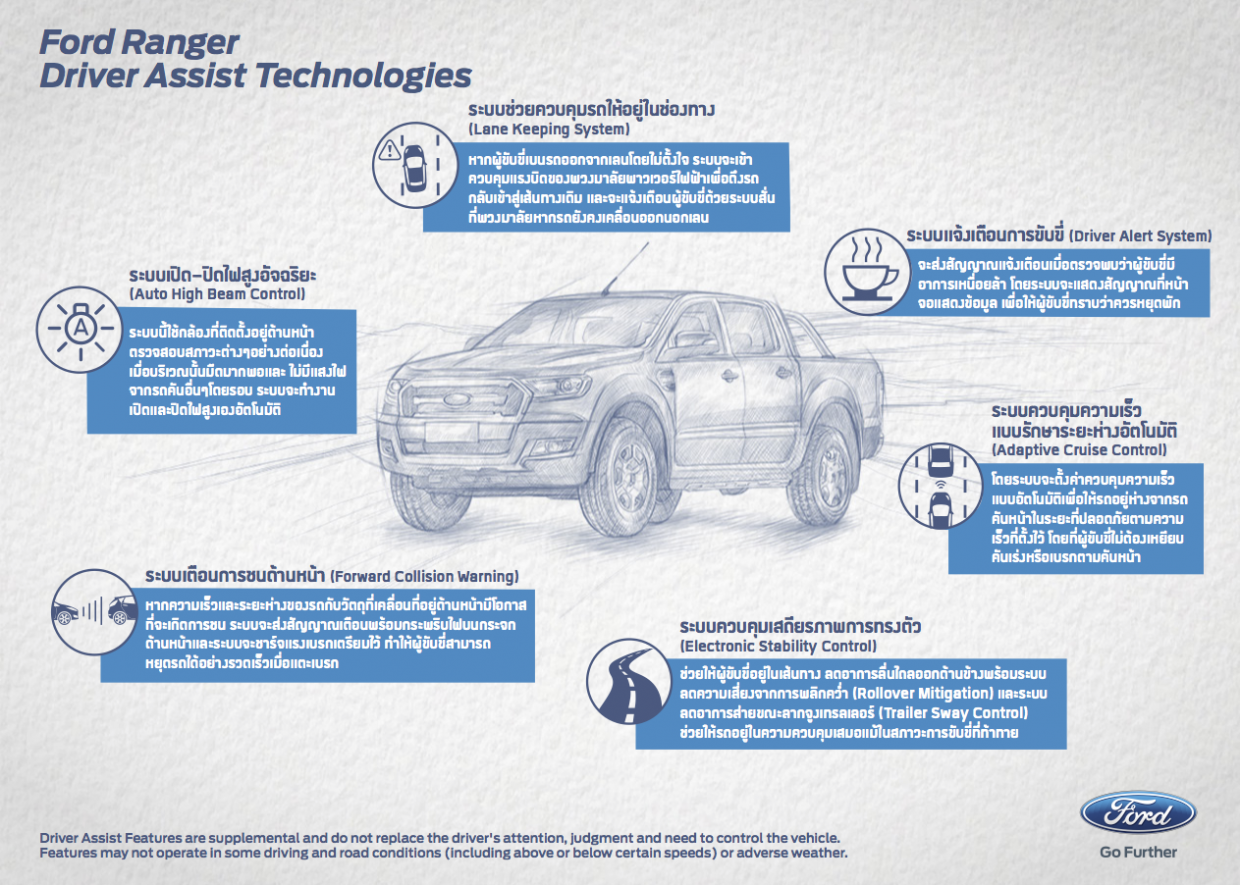
Many years ago, we dreamed of cars doing this and that. Let's look at "Ford", a technology leader. How can cars think for you? How is it better? What is the smartest technology you have? It might be the car you drive today, which is about to advance to the next level.
This is consistent with the concept of the event “The 34th Motor Expo” or Motor Expo 2017, which states "New Age Vehicles, a Distant Dream Come True” or “New Age Vehicles … A Distant Dream Come True” to allow consumers to see vehicles equipped with the features they once dreamed of, and to confirm that all dreams can come true in the automotive world.
Let's look at Ford's technology and how cars can do things for us...Ford is fully committed to its goal of producing self-driving vehicles by 2021 to support car-sharing and ride-hailing services. Although it will take another 2-3 years for the world to fully enter the era of autonomous vehicles, the cars we drive today are considered semi-autonomous and feature built-in driver-assist technologies. These advanced technologies are designed to detect imperfect driving performance even before the driver realizes they need assistance. Certainly, these current driver-assist technologies are smart enough to think and judge a driver's skills. Here are 6 technologies you should have to make your driving on the road safer and less stressful. Details vary, so you should study them carefully in your car's manual.
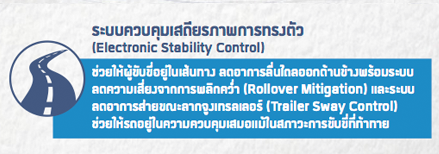
Situation: You turn the steering wheel sharply, causing the car to lose stability.
Decision: The driver needs assistance to regain control of the car.
Action: Automatically applies brake force and adjusts engine torque to help you regain control of the car.
How it works: Most new car models already come with an Electronic Stability Program (ESP), which can help you maintain stability in dangerous driving situations or when you make a sudden swerve. When the system detects that your car is losing stability, it automatically applies brake force to each wheel and adjusts engine torque to improve the car's stability and help reduce side skidding. If the ESP light on the dashboard illuminates, it indicates that the ESP system is active. Avoiding side skidding is very important as it is one of the main causes of various accidents.
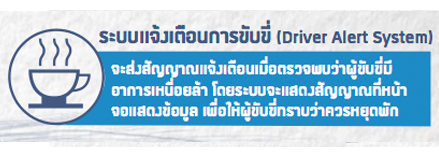
Situation: The car drifts out of its lane and sways.
Decision: The driver may be distracted or drowsy.
Action: Alerts when driving vigilance decreases.
How it works: The Driver Alert System measures the level of driving vigilance by measuring the car's position within the lane and its degree of sway. If the driver's vigilance level falls below a specified threshold, which may be due to fatigue or lack of concentration, the system will send a “Rest Now” warning signal along with an audible alert.
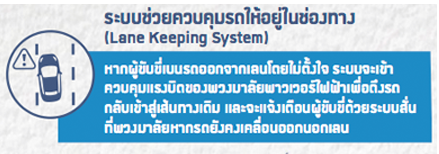
Situation: The car is unintentionally drifting out of its lane.
Decision: The driver is unintentionally changing lanes.
Action: Alerts you when your car is drifting out of its lane and guides you back into the current lane if there is no response.
How it works: When your car is unknowingly drifting out of its lane, the system will determine that it is an unintentional lane departure and will take control of the steering wheel torque to pull the car back into its original lane. If the car continues to drift out of the lane without your response, the next step is for the system to alert the driver with a steering wheel vibration.
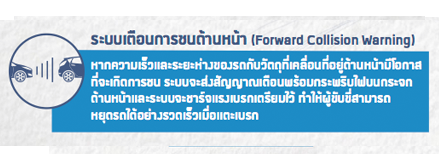
Situation: You are on a fast-moving road, and there is a high likelihood that your car will collide with the car in front, and you are not prepared to prevent it.
Decision: The driver needs assistance to stop the car in time to prevent a collision.
Action: Alerts you to stop the car more quickly.
How it works: If the speed and distance between your car and a moving object in front indicate a potential collision, the system will send an audible warning along with flashing lights on the windshield, and the braking system will pre-charge, allowing the driver to stop the car quickly when the brake is pressed.
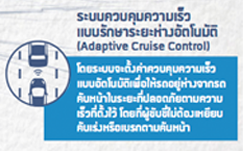
Situation: The car in front is moving rapidly, and your car is following at speed.
Decision: Prevents collision in case the car in front slows down.
Action: Controls the car's speed and maintains a constant distance from the car in front.
How it works: When automatic speed control is set, the system maintains a safe distance from the car in front, without the driver needing to press the accelerator or brake to follow the car in front.
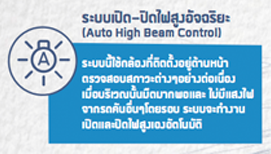
Situation: Your car is driving on a relatively dark road.
Decision: The driver forgot to turn on the high beams.
Action: Automatically controls high beam activation to reduce accidents.
How it works: This system uses a front-mounted camera to continuously monitor conditions. When the area is dark enough and there are no lights from other surrounding vehicles, the system automatically activates the high beams. When it detects sufficient light or oncoming headlights, the system automatically deactivates the high beams.
Semi-autonomous driving technology and driver-assist technologies are gaining popularity, and they show users what future technology will be like. So, be prepared to embrace and learn about these technologies. No matter how they think and decide for us, these advanced technologies are all for the benefit of the drivers. See? "New Age Vehicles, a Distant Dream Come True” has truly become a reality.


Follow Motor Expo Club Network