YOUR CART
IS EMPTY
IS EMPTY


When driving in the rainy season or during heavy rain, drivers should turn on their low beam headlights instead of parking lights. Turning on low beams costs almost nothing, the alternator barely works harder, and there's no need to worry about shortening the lifespan of headlight bulbs because headlight bulbs are very cheap compared to safety.
Do not use high beams
Some people see that it's raining heavily and fear that if they turn on low beams, other cars won't see them, so they turn on high beams. But little do they know that the "high beams" from their car will blind oncoming drivers. When it's raining heavily, visibility is already poor, so turning on just the low beams is sufficient.
Emergency lights are also forbidden
And most importantly, strictly avoid turning on emergency lights or hazard lights while the vehicle is moving. Not only does it confuse others, but it also makes it difficult for drivers behind to distinguish whether the car in front is stopped or moving. This type of light should only be turned on in cases of “emergency stops.” If you can still see, continue driving carefully. If not, find the safest parking spot as quickly as possible.
Before turning or changing lanes, always remember to use your turn signal to warn others in advance. You should hold the steering wheel with both hands, left hand at 9 o'clock and right hand at 3 o'clock, and be ready to reduce speed immediately if hydroplaning occurs, which can happen at any time while driving.
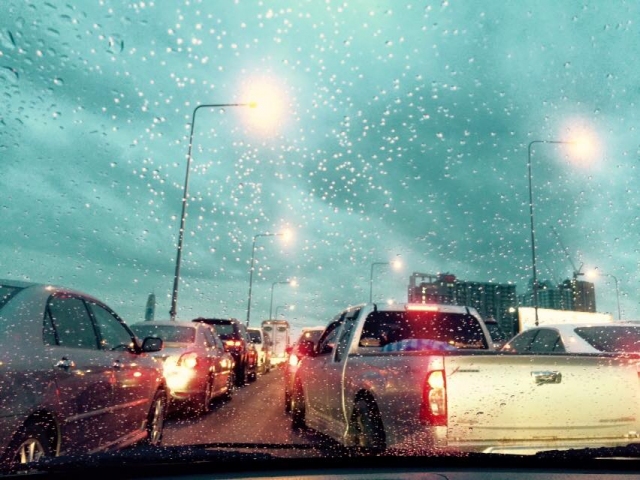
Maintain distance from the car in front
All types of vehicle users should exercise extra caution when driving in heavy rain, both in controlling the vehicle and braking, which will require a longer stopping distance than on dry surfaces, as well as preventing loss of control and skidding. Maintain a greater distance from the vehicle in front than usual to allow for a safe stopping distance. Therefore, you should reduce speed, be careful, and drive mindfully.
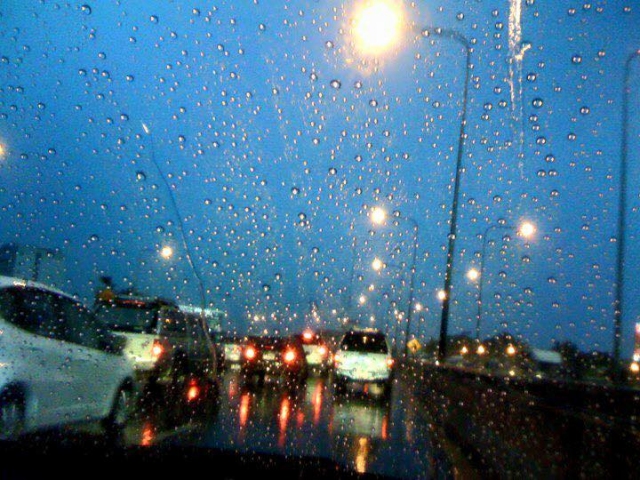
Don't forget to check your lights
Because signal lights are very important during the rainy season, especially when it rains so heavily that visibility is poor. These lights not only serve as a point of observation for other cars to see us but also act as signal lights indicating our intended direction. Therefore, we should check all lights to ensure they are ready, including parking lights, high and low beam headlights, turn signals, taillights, reverse lights, license plate lights, and fog lights (if available)


Follow Motor Expo Club Network