YOUR CART
IS EMPTY
IS EMPTY

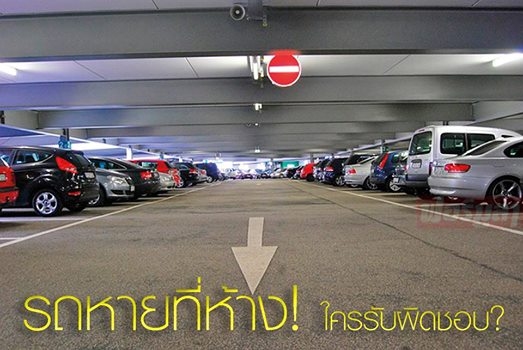
...When "the car disappeared" while parked at the mall, it was a headache for both
customers and many business owners used clever tactics to let us park comfortably,
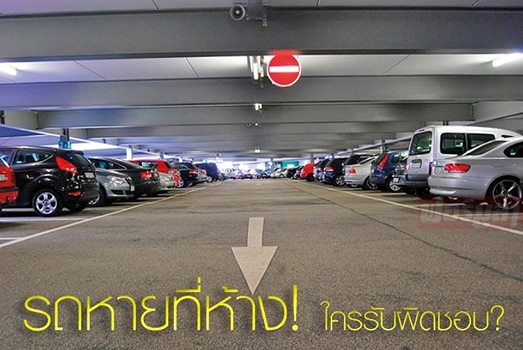
The party that initiated the lawsuit against Mall B was "Mungmunjung Insurance Company Limited", which is skilled in legal matters professionally. The complaint stated that the insurance company paid "Nai Humthong" approximately 200,000 Baht under the insurance contract, as his mid-aged pickup truck was stolen while parked at Mall B in broad daylight. Therefore, the company subrogated the right to sue the mall for reimbursement, as the mall was responsible for its negligence in allowing thieves to steal the car from its parking lot.
Mall B fought the case, arguing that it did not provide staff to oversee car entry/exit, but merely provided parking spaces for customers. Furthermore, it posted signs informing the public to take responsibility themselves. Customers did not object and frequented the mall. It requested dismissal of the case and that "Company K," which the mall hired for security, be made a co-defendant, in case of losing the case, to share the liability.
Company K, the co-defendant, also fought the case similarly to Mall B, requesting dismissal.
The Court of First Instance sat stern-faced in the courtroom, in the style of typical judges. After hearing all parties' witnesses, it ruled for the defendants to jointly pay the amount claimed in the lawsuit with interest to Mungmunjung Insurance Company Limited.
In the second round, the defendants filed an appeal, believing they had a chance to win.
The Court of Appeal did not accept the defendants' arguments and affirmed the ruling of the Court of First Instance.
The defendants played the long game, refusing to pay easily, and filed a further appeal to the Supreme Court to win.
The Supreme Court reviewed the case and expertly ruled that:
Company B is a department store that sells retail and wholesale consumer goods and must prioritize various services, especially parking, which is a crucial factor in customers' decision to patronize it. In this case, the Building Control Act B.E. 2522 (1979), Sections 8 (9) and 34, stipulates that the defendant, as the building owner, must provide parking spaces to facilitate traffic. The defendant must also consider and be responsible for the safety of customers' lives and property, not leave customers to be careful or risk danger themselves. The fact that the defendant previously issued parking tickets for car entry/exit, which was a relatively strict method, but then canceled that method at the time of the incident and turned to using CCTV cameras instead, meant that criminals could enter and exit the mall parking lot and steal cars easily. Even though Mall B, the defendant, posted notices stating that it was not responsible for any loss or damage, and customers were aware of the cancellation of parking tickets and still parked their cars, the Court definitively ruled that this was a unilateral stipulation by the defendant and had no effect in exempting the mall from liability for its tortious act.
"The Supreme Court, therefore, agreed with the lower courts' decisions and affirmed the judgment, with the defendants losing the case completely."
Nowadays, we all drive into mall parking lots without being issued a parking ticket at many malls because they believe they can evade responsibility. If a customer is caught off guard, the best solution is to buy first-class insurance. In cases like that of Nai Humthong in this lawsuit, it can alleviate the headache by letting the insurance company pursue the mall on our behalf, which is more suitable. Also, one must carefully check whether the car is parked in the mall's parking lot to be able to pursue the mall.
From Supreme Court Judgment No. 7471/2556
Source: Car Lost in Mall!!?? AUTOINFO Online Column: Shade of the Court |One of the most popular columns among fans| FORMULA MAGAZINE


Follow Motor Expo Club Network