YOUR CART
IS EMPTY
IS EMPTY

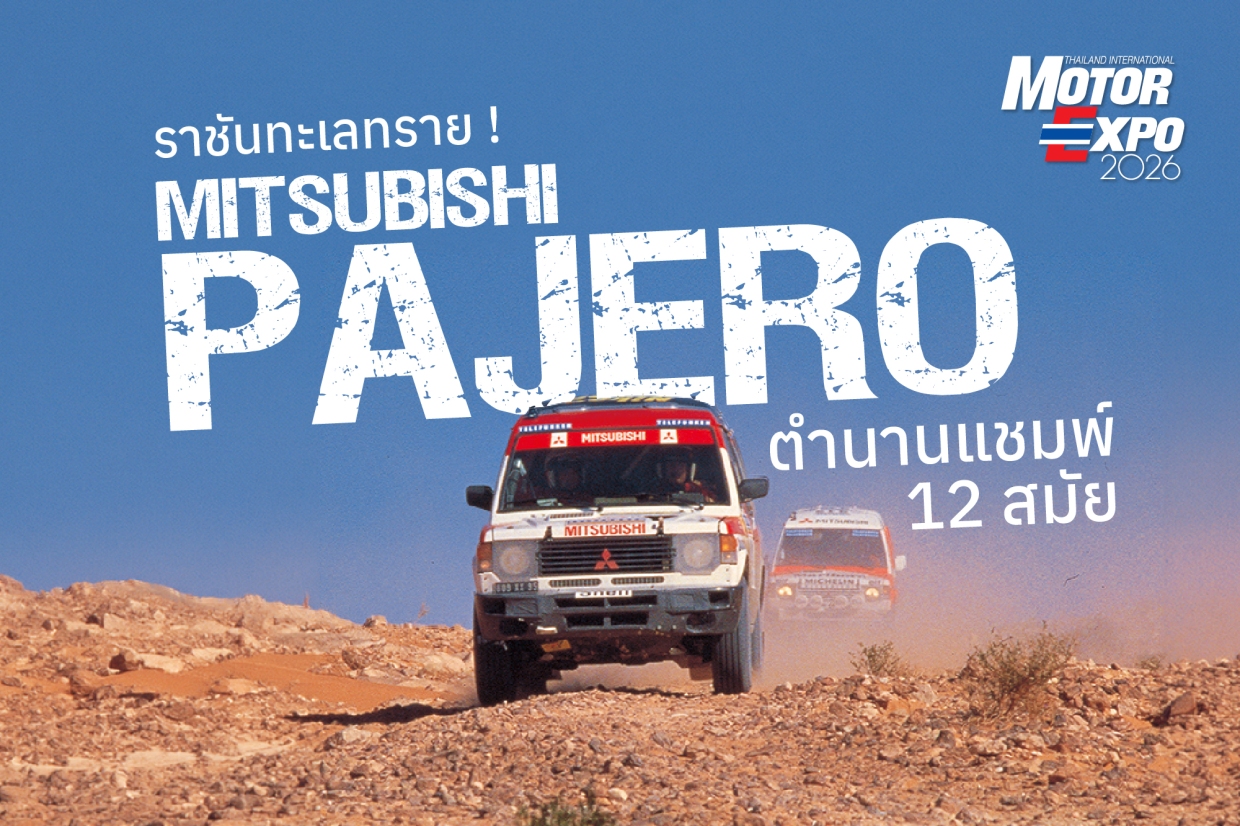
Mitsubishi Pajero proved the durability of the vehicle and the toughness of the people in the middle of the brutal desert during the Dakar Rally, creating a legend by winning 12 championships and setting a record of 7 consecutive wins, earning the title of "The King of Desert."
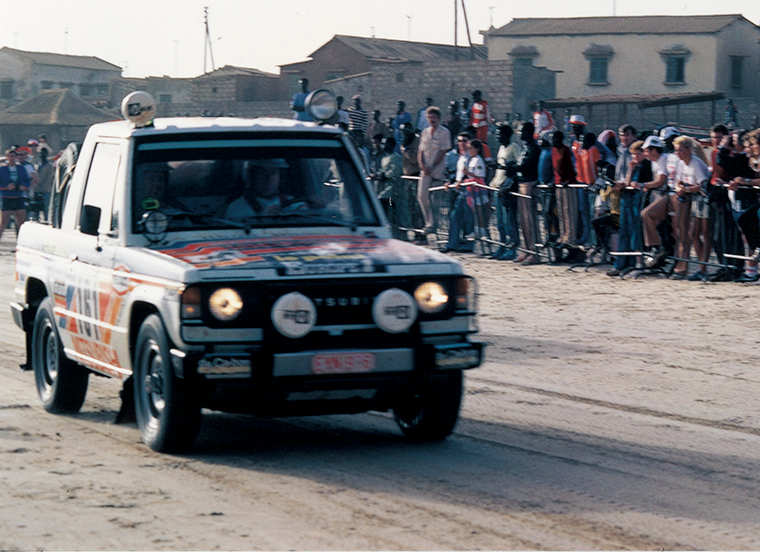
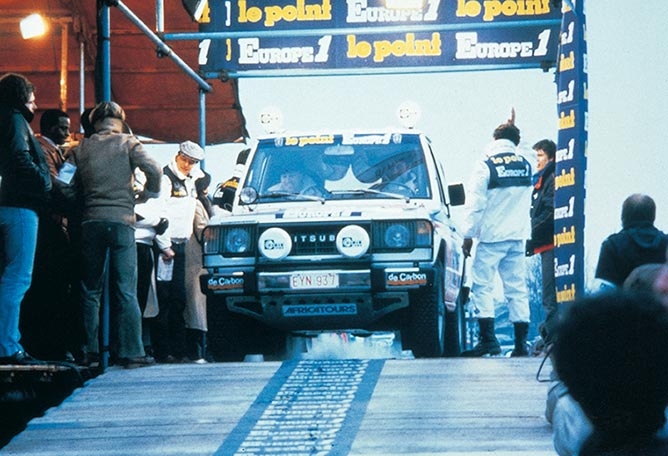
MITSUBISHI MOTORS sent the prototype soft-top PAJERO with a 2.6-liter gasoline engine to touch the sand in the first DAKAR RALLY after production began in 1982. This was a crucial step in testing the potential of the 4WD system of the MITSUBISHI PAJERO. The battlefield was filled with sand dunes as far as the eye could see. The race started from the Place de la Concorde in Paris, heading south to the destination in Senegal, covering a total distance of 9,257 kilometers. British driver ANDREW COWAN managed to take the PAJERO to its debut, winning 1st place in the production car class and finishing 11th in the overall standings.
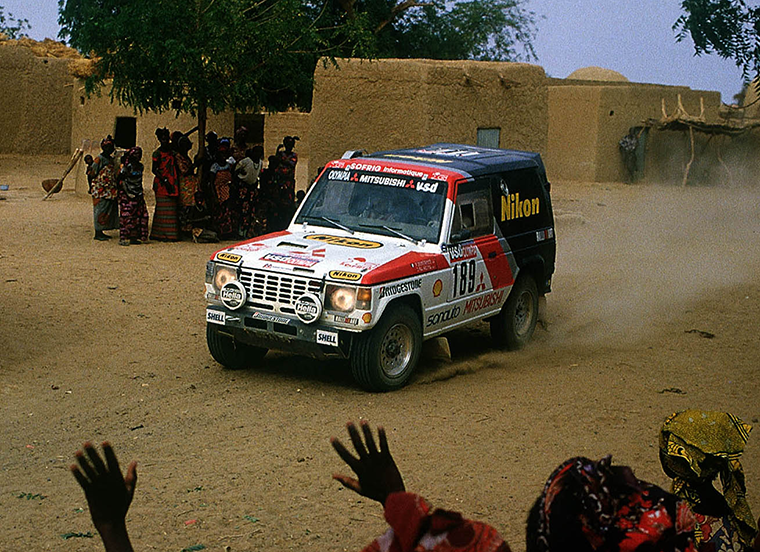
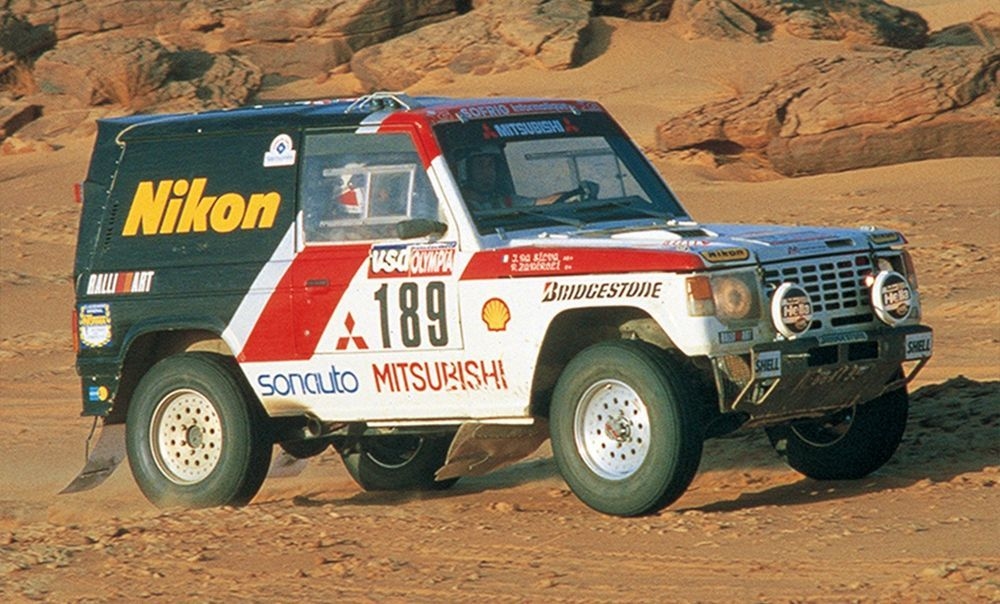
A historic milestone that shook the global motorsport industry occurred when the MITSUBISHI PAJERO triumphantly claimed 1st place in the overall standings. This marked the first overall victory for MITSUBISHI MOTORS and made it the first Japanese automaker to win this world's toughest cross-continental rally. French driver PATRICK ZANIROLI and his co-driver JEAN-DA SILVA steered the PAJERO race car through sandstorms, steep dunes, and sharp rocks over a distance of more than 10,000 kilometers from Paris, France, cutting through the Sahara Desert into Dakar, Senegal.
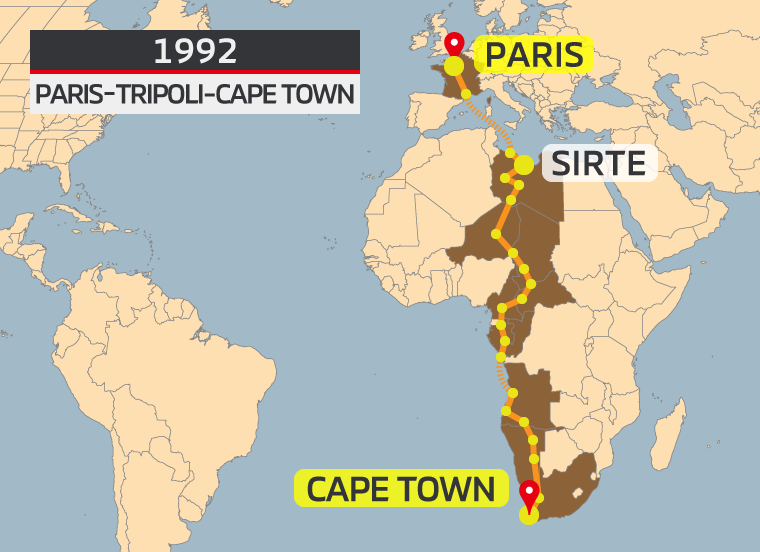
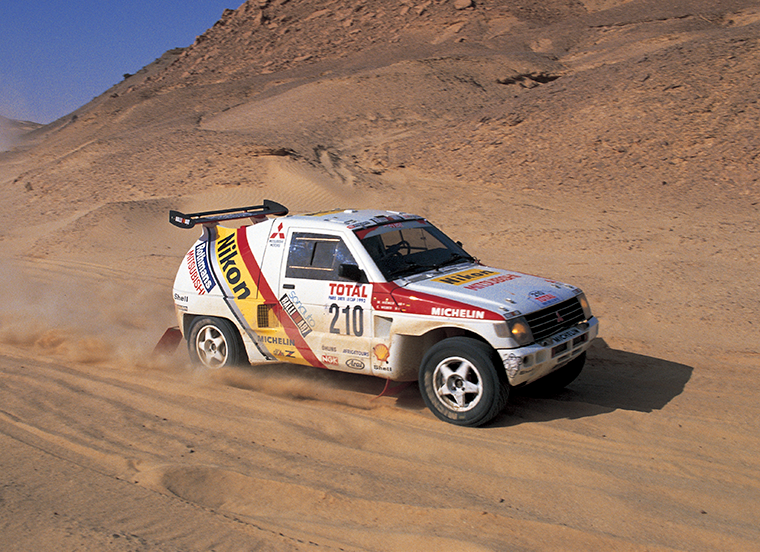
The route covered 11 countries across the African continent, with a massive total distance of over 13,000 kilometers. The terrain was not just vast deserts; the drivers faced various unfamiliar obstacles. At the beginning of the grueling race, HUBERT AURIOL drove the MITSUBISHI PAJERO to set the fastest time, surged to the lead, and maintained his position firmly until crossing the finish line, successfully winning the overall championship.
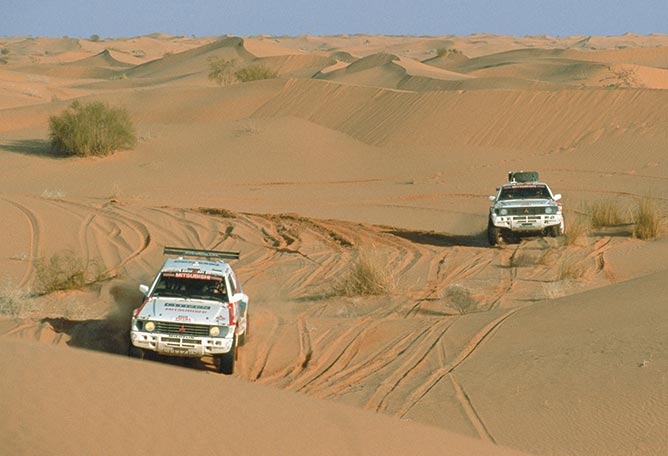
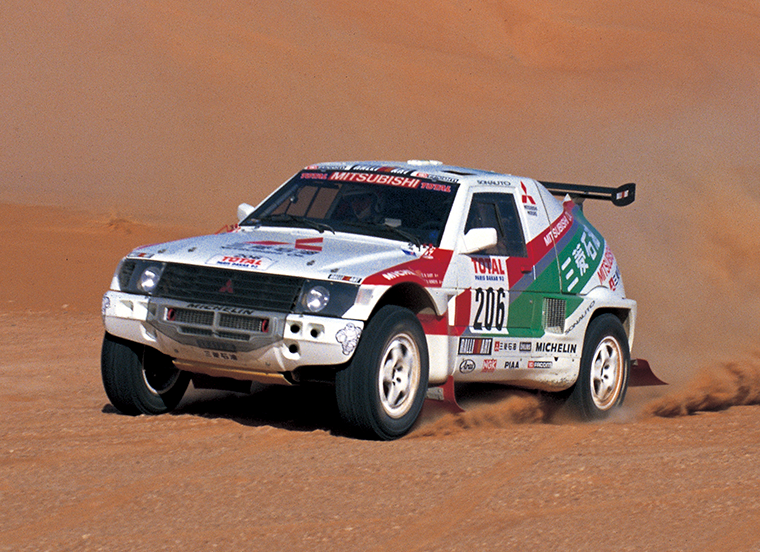
The race began with fierce competition between the MITSUBISHI PAJERO and its rival, CITROEN. The route was full of sharp rocks ready to cause severe damage to many race cars. Many teams had to stop and lose time due to flat tires, while MITSUBISHI driver BRUNO SABY used superb driving tactics to set the fastest time, leading the MITSUBISHI PAJERO to its 3rd championship and its 2nd consecutive win.
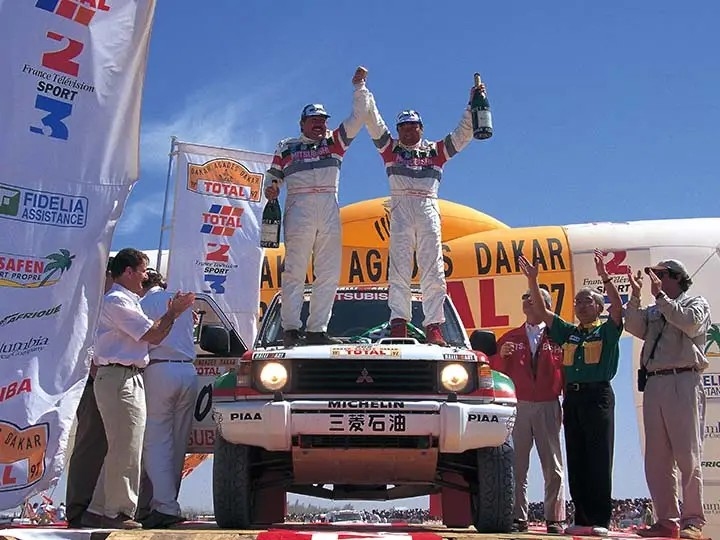
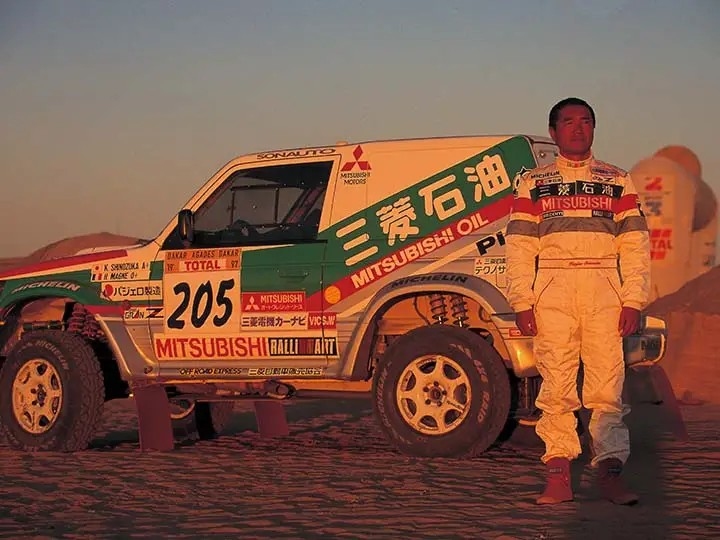
There was a significant rule change; competing vehicles had to be based more on production cars. MITSUBISHI therefore used the 2nd generation PAJERO as the base for the race car, improving the body strength and the double wishbone front suspension. The power came from a 3.5-liter V6 gasoline engine, the same as the mass-produced model, which was characterized by its immense torque, helping to make vehicle control on sand easy and precise. Japanese driver KENJIRO SHINOZUKA drove steadily and decisively, maintaining a lead until crossing the finish line, successfully winning the overall championship and making history as the first Japanese driver to win the DAKAR RALLY.
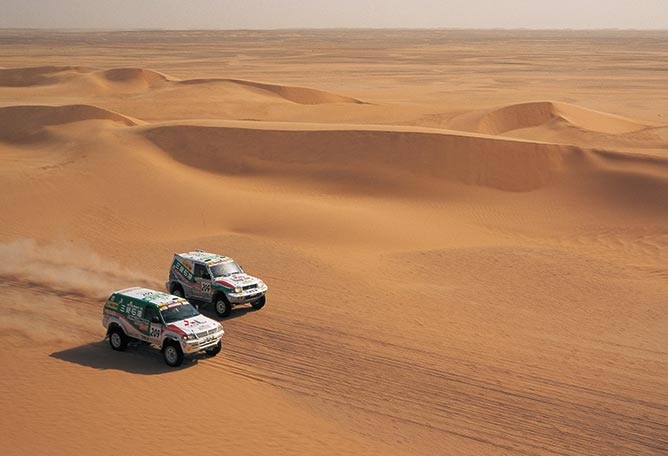
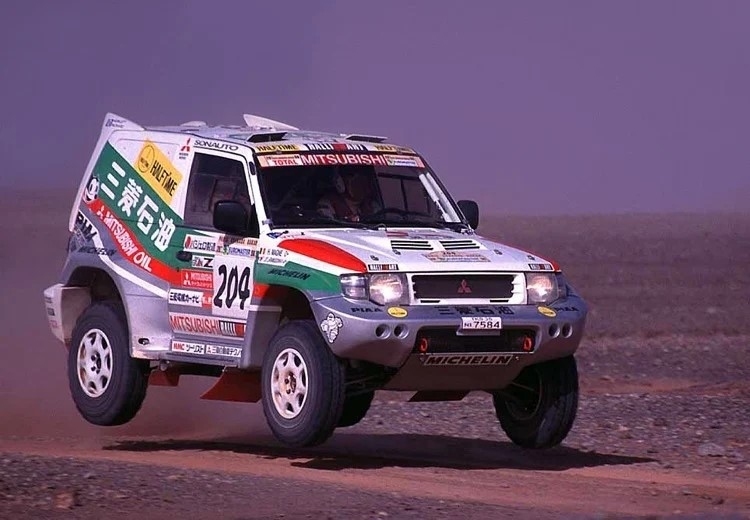
MITSUBISHI wanted to create a vehicle that could serve as a base for a new DAKAR race car under rules requiring race cars to be based on production models. MITSUBISHI took the short wheelbase PAJERO and redeveloped it, widening the front and rear track, changing the rear suspension to a multi-link system, and improving the front suspension for more travel. It featured a 4WD system, a V6 MIVEC engine, and a differential system developed for rugged driving. Simply put, MITSUBISHI took a standard PAJERO and turned it into a race car that could be registered for the road.
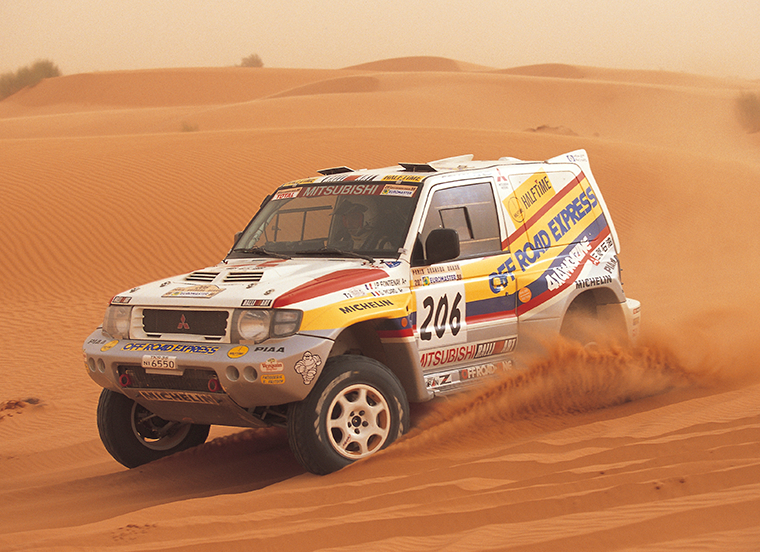
As for the battle that year, the convoy of drivers headed to the finish line in Dakar, Senegal, but an unexpected event occurred in the northeast of Mali when gunshots were heard, forcing the organizers to cancel the special stage immediately. However, the PAJERO race cars were able to cross the finish line triumphantly. This victory marked the 5th overall championship for MITSUBISHI MOTORS.
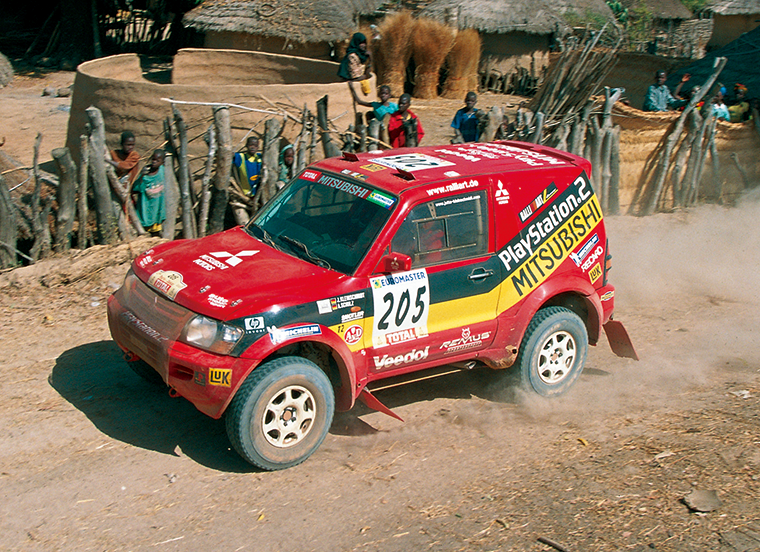
The competition was fierce between the MITSUBISHI PAJERO and the SCHLESSER BUGGY. In the early stages, SCHLESSER took the advantage and the lead, but fell to 8th in the overall standings after being penalized for violating rules in the 7th stage. Meanwhile, HIROSHI MASUOKA in the PAJERO showed a masterpiece performance by setting the fastest time in the special stage, successfully turning the tide to lead the overall standings, resulting in the MITSUBISHI team closing the first half of the race with a thrilling 1-2 finish.
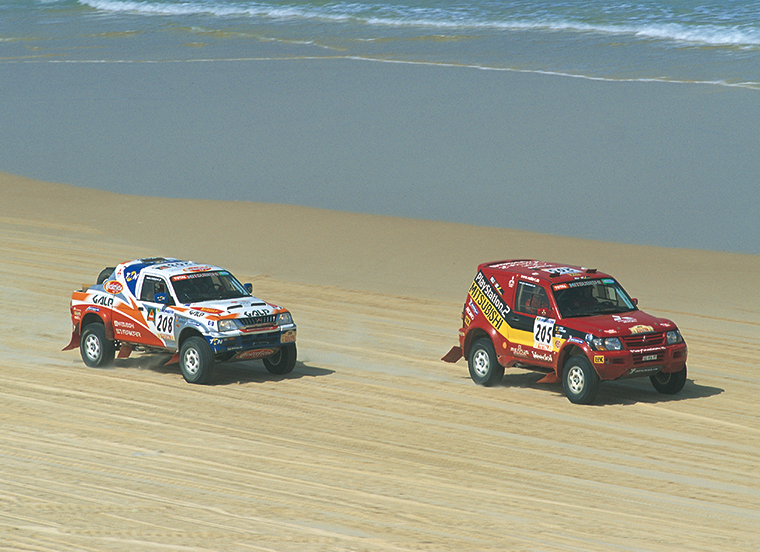
In the penultimate stage, a major drama occurred when SCHLESSER started ahead of time to cut in front of HIROSHI MASUOKA instead of starting in the actual time order, leading to a fierce and extremely tense battle. This caused HIROSHI MASUOKA's car to go off-track, and the right rear axle broke, causing him to lose a massive amount of time. However, the SCHLESSER BUGGY was penalized by the judges with a 1-hour time penalty, causing the overall standings to shift immediately. JUTTA KLEINSCHMIDT, a female driver from the MITSUBISHI team, surged to 1st place in the standings, leading her teammate HIROSHI MASUOKA in 2nd place by only 2 minutes and 55 seconds.
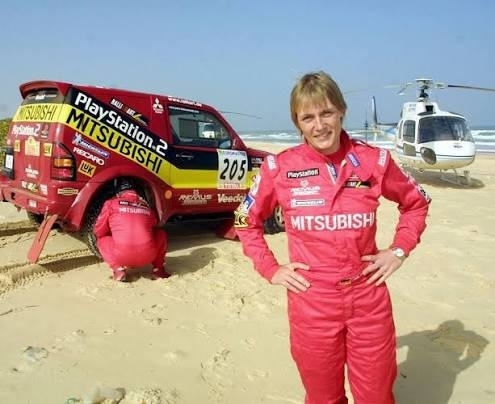
In the final stage, a new page of world motorsport history was written when German female driver JUTTA KLEINSCHMIDT brought the MITSUBISHI PAJERO to the finish line and stepped to the top of the podium, becoming the first and only female driver in history to win the DAKAR RALLY. HIROSHI MASUOKA finished in 2nd place, reinforcing the triumphant 1-2 finish.
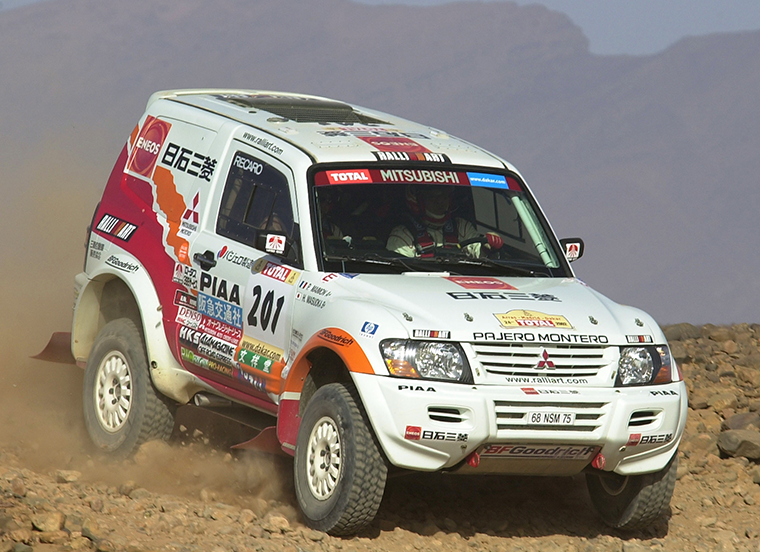
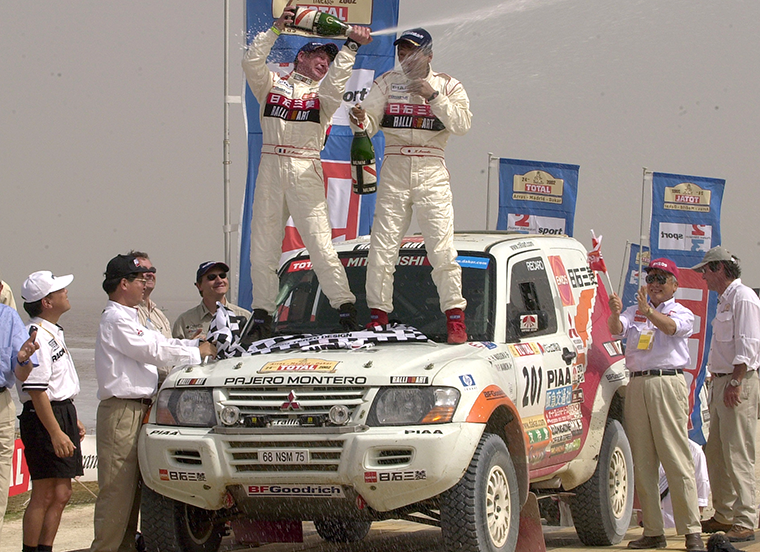
An unexpected event occurred when the SCHLESSER BUGGY, the arch-rival of the MITSUBISHI MOTORS team, suffered a severe engine fire that completely destroyed the car, forcing the French driver to withdraw from the race. Meanwhile, MITSUBISHI MOTORS upgraded the PAJERO EVOLUTION race car to be even stronger, and HIROSHI MASUOKA unleashed a fierce performance, leaving the competition behind to successfully win the overall championship for the first time in his life with dignity, completely erasing the disappointment from the previous year.
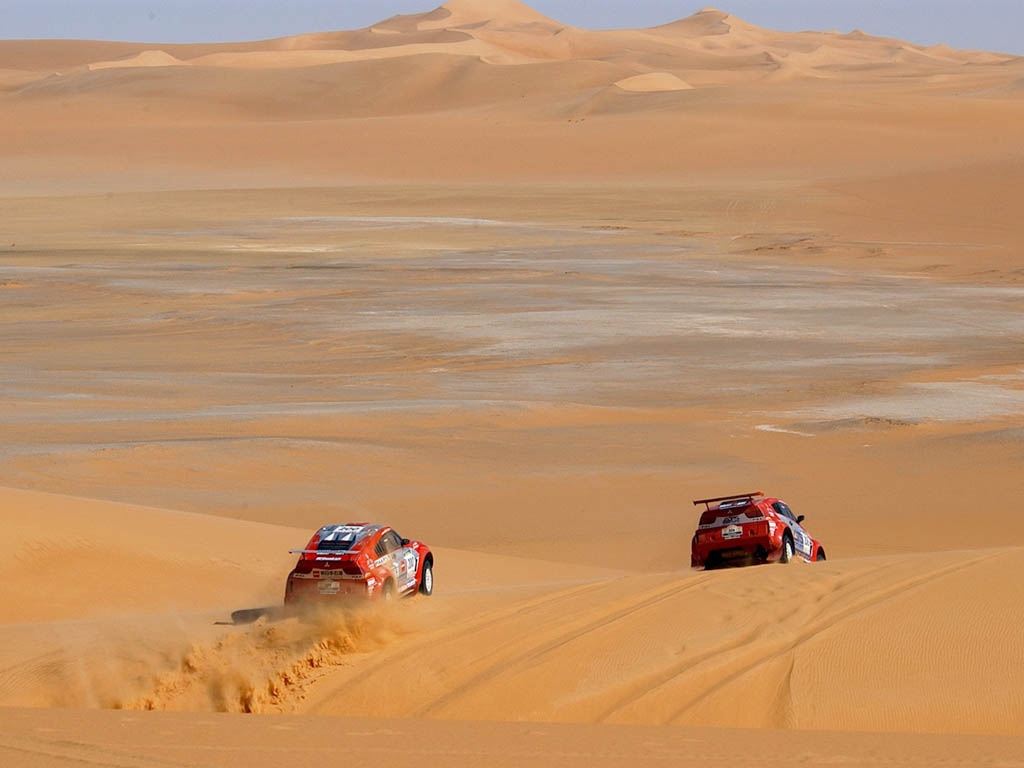
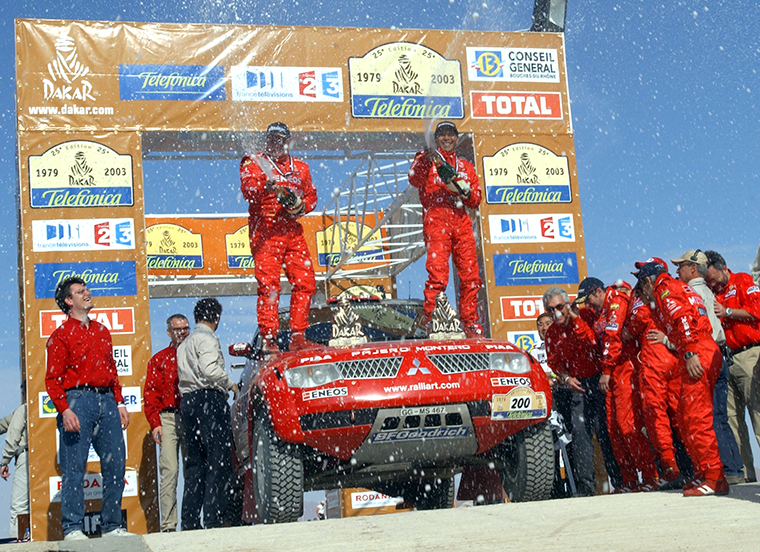
HIROSHI MASUOKA made history as the first Japanese driver to win the DAKAR RALLY twice in a row, but this cross-continental battle turned into an intense chase between two top drivers from the same MITSUBISHI MOTORS team: HIROSHI MASUOKA and STEPHANE PETERHANSEL. The turning point occurred in the penultimate stage when STEPHANE PETERHANSEL's PAJERO EVOLUTION hit a rock hard, damaging the suspension. This allowed HIROSHI MASUOKA, who was trailing, to take the opportunity to overtake and take the lead in the overall standings, successfully bringing his trusted race car to the finish line.
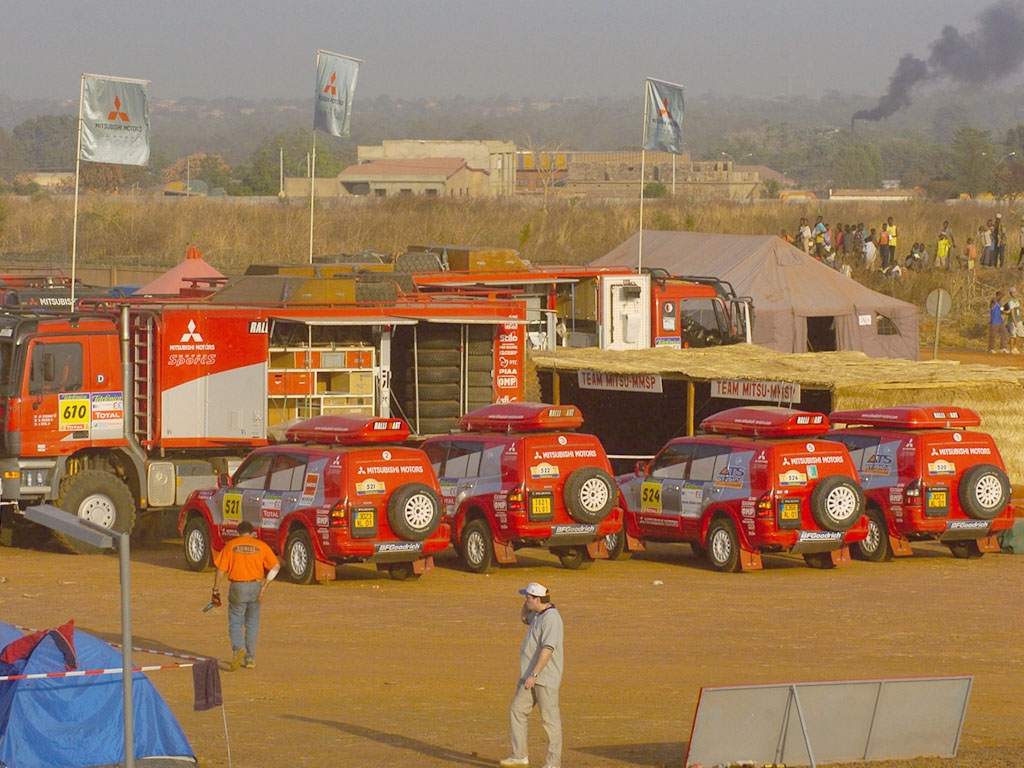
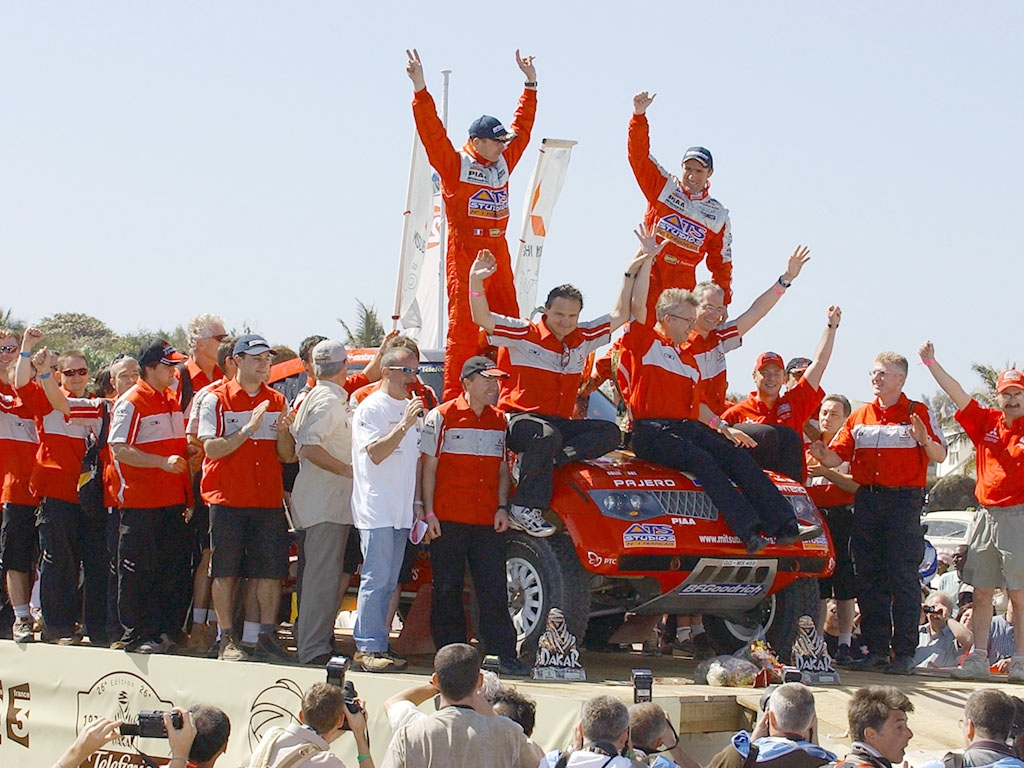
A new page of history was written when STEPHANE PETERHANSEL, the king of cross-continental rally who had already won the motorcycle category 6 times, successfully unlocked the win in the car category in this event for the first time in his life. This made him the second person in history after HUBERT AURIOL to win the DAKAR RALLY in both 2-wheel and 4-wheel categories.
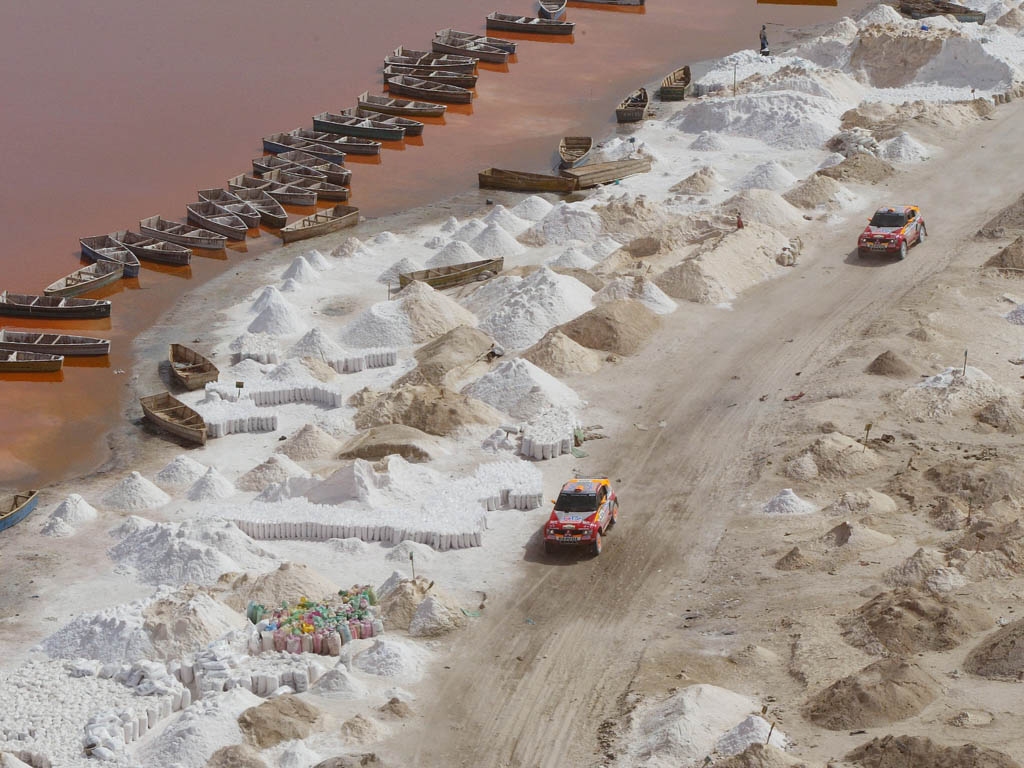
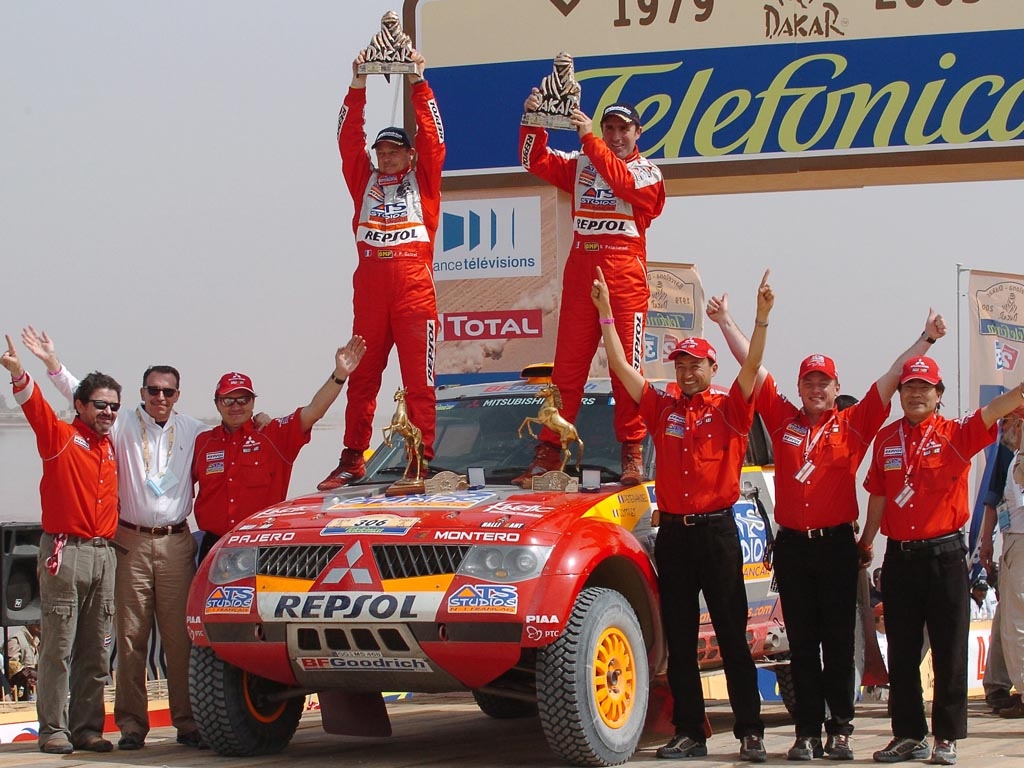
MITSUBISHI MOTORS continued to sweep success. Even though the PAJERO faced obstacles and suffered 3 flat tires that year, STEPHANE PETERHANSEL maintained his composure flawlessly, showing a fierce performance by setting the fastest time in the stage, jumping the PAJERO EVOLUTION race car to the lead in the overall standings, and successfully defending the car category championship for the 2nd consecutive time.
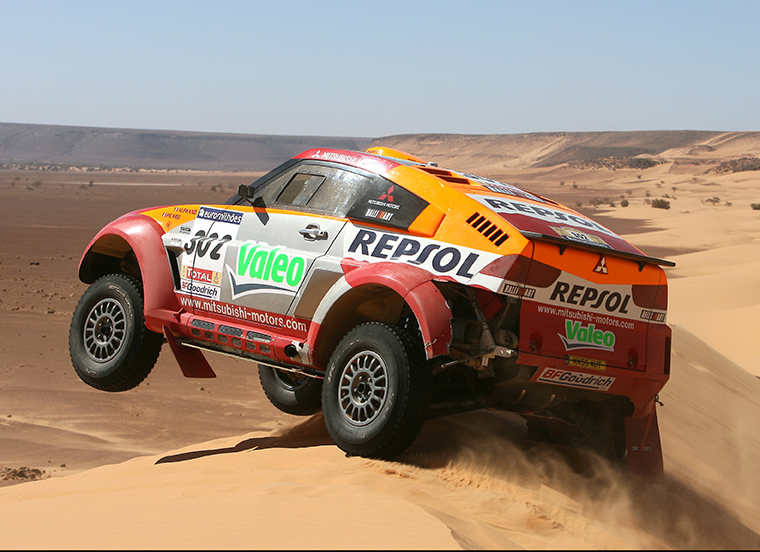
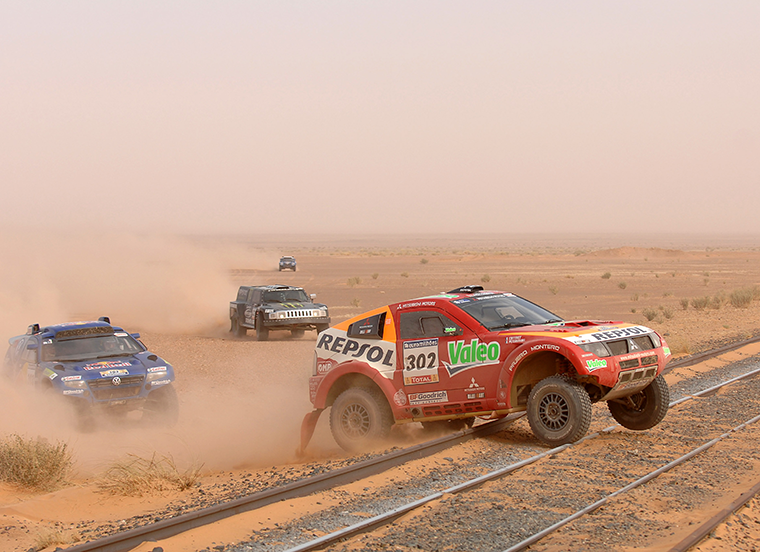
This was another fierce arena when rival team VOLKSWAGEN MOTORSPORT brought a fleet of 4WD diesel-powered race cars like the RACE TOUAREG 2 to attack MITSUBISHI MOTORS from the first stages, turning it into a battle between the 4.0L V6 gasoline power of the PAJERO EVOLUTION and the turbo-diesel power of the TOUAREG.
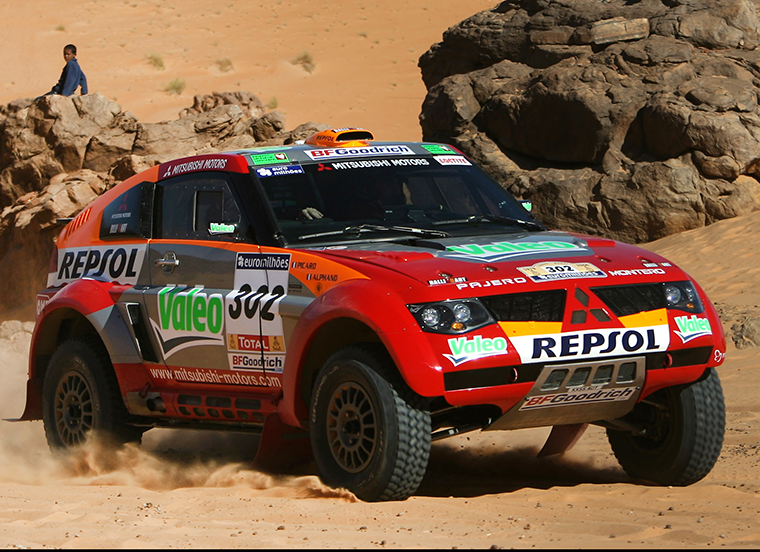
Although VOLKSWAGEN launched a heavy attack hoping to win their first championship, the MITSUBISHI MOTORS team chose a calm strategy, not taking unnecessary risks. This allowed the PAJERO EVOLUTION to surge to the lead, and they adjusted their strategy to focus on maintaining the pace while speeding up to escape the pursuit of the remaining VOLKSWAGEN in the championship group, resulting in the PAJERO EVOLUTION winning by a margin of 17 minutes and 53 seconds.
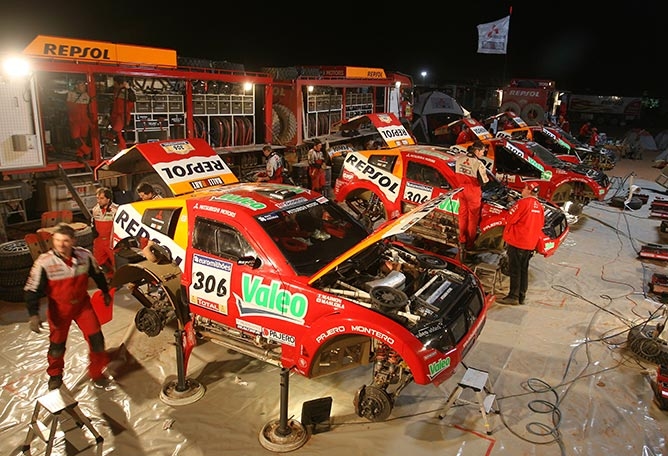
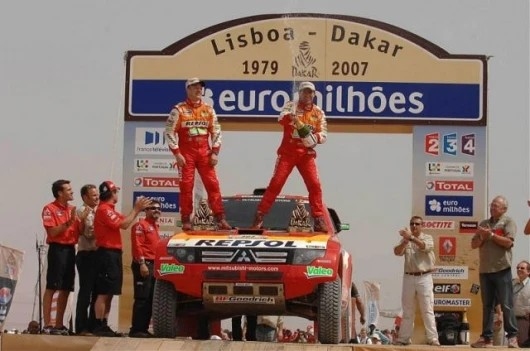
This was the conclusion of the greatness in the golden age of MITSUBISHI MOTORS in the cross-continental rally arena when the factory team decided to send the ultimate upgraded version, the PAJERO EVOLUTION (MPR13) with a 4.0L V6 MIVEC engine, to fight for the championship throne.
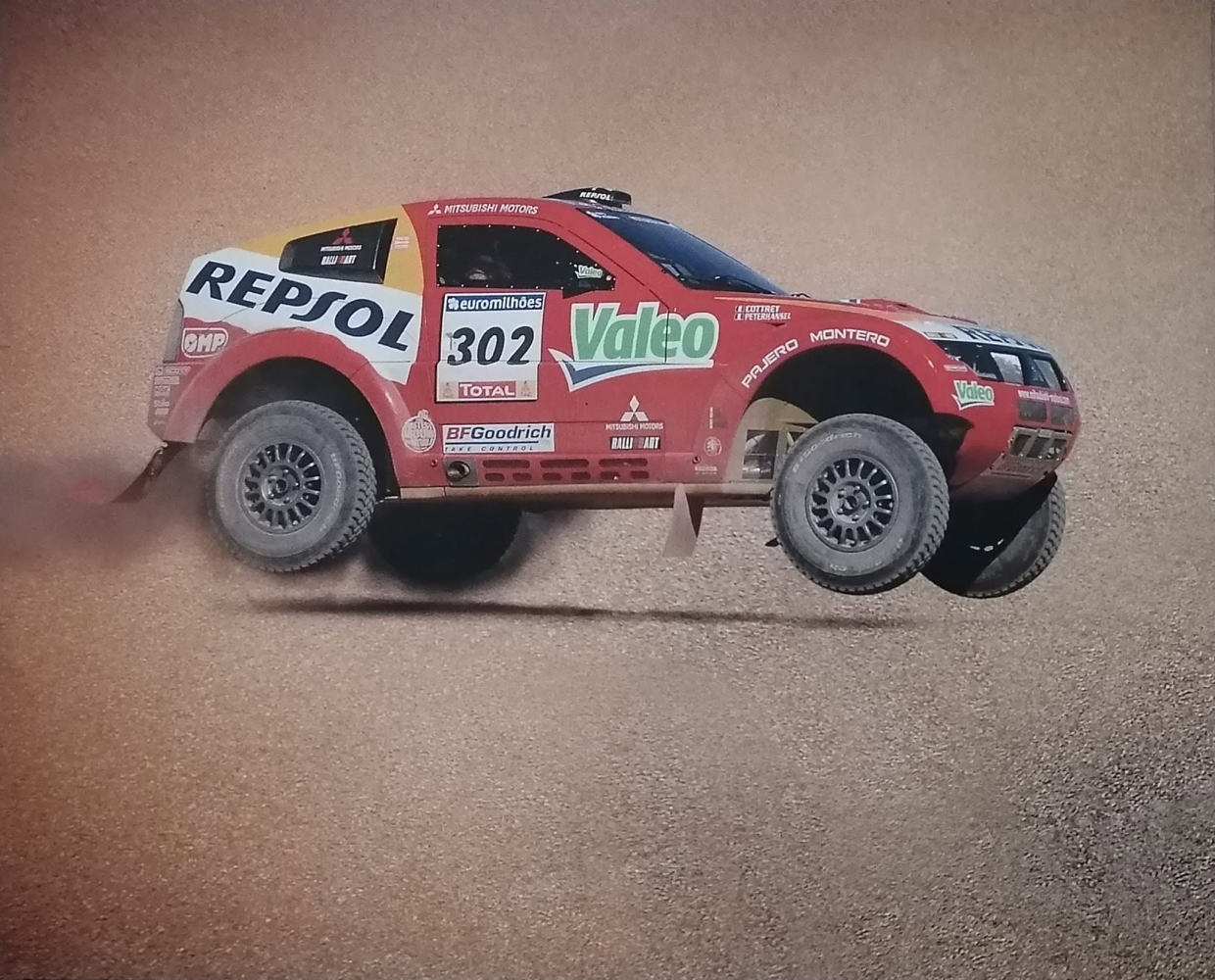
The race that year perfectly proved the durability and superiority of the PAJERO EVOLUTION (MPR13). With a lightweight body and strength resistant to torsion, the mounting position of the large fuel tank and spare tires was lowered close to the floor to pull the center of gravity as low as possible, while perfectly adjusting the weight distribution balance between front and rear. The conclusion was that STEPHANE PETERHANSEL was the driver who led the PAJERO EVOLUTION to create history by holding the championship for 7 consecutive years, accumulating a record of 12 total championships, which no one has broken to this day.
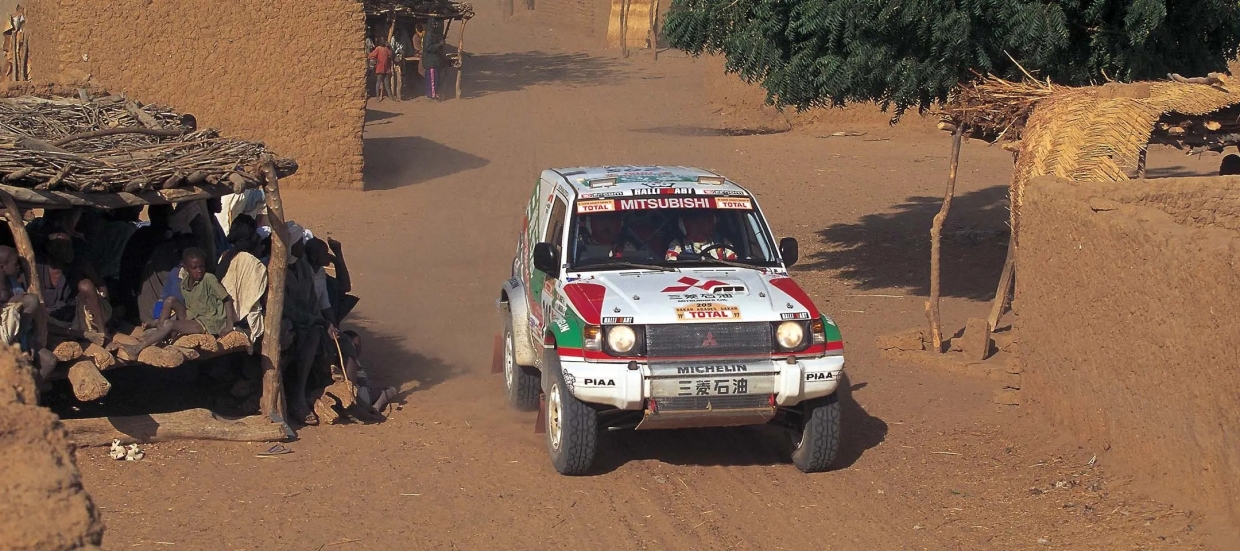
MITSUBISHI MOTORS has been officially recorded in the GUINNESS WORLD RECORDS as the manufacturer that has won the most overall car category championships in the DAKAR RALLY, with 12 titles. Even though many years have passed and the DAKAR RALLY has moved its arena to Saudi Arabia today, no one has come close to this record yet.
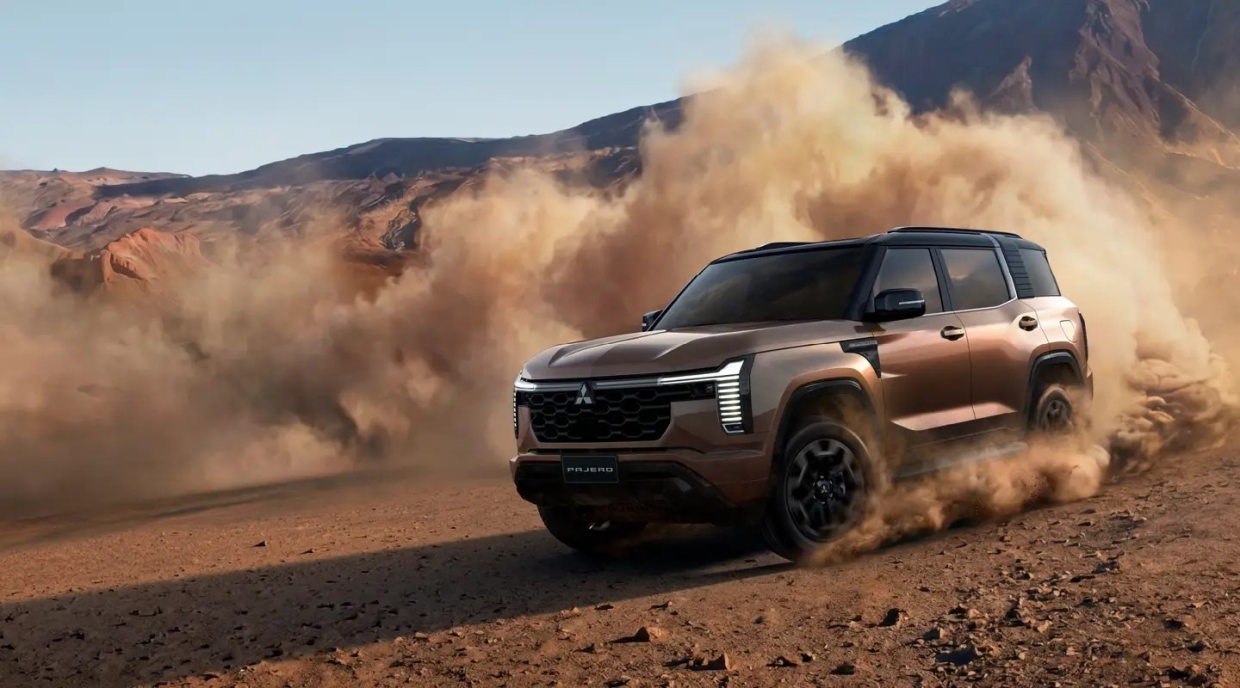
Don't forget! Come and meet a variety of vehicles from MITSUBISHI MOTORS, led by the ALL NEW MITSUBISHI PAJERO, along with special year-end offers at the Mitsubishi Motors (Thailand) booth at MOTOR EXPO 2026, or the 43rd Thailand International Motor Expo, from December 2-13, 2026, at IMPACT Challenger Hall 1-3, Muang Thong Thani.


Follow Motor Expo Club Network