YOUR CART
IS EMPTY
IS EMPTY

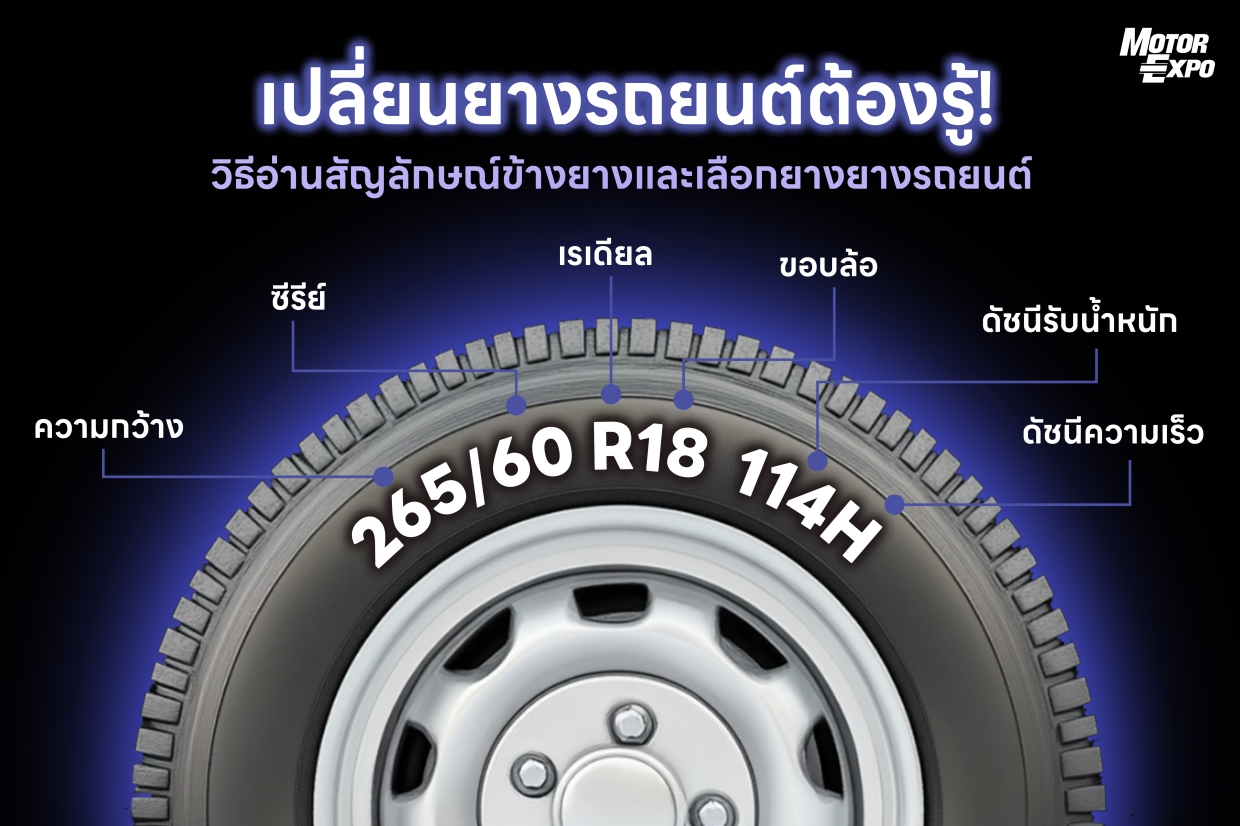
Have you ever been confused when it's time to change car tires and you look at the numbers on the sidewall, wondering what "265/60R18 114H" means? This article will help you understand the basic codes on car tire sidewalls in 5 minutes and confidently choose your own tires.
| Position in image | Example from image | Technical Name | Meaning |
|---|---|---|---|
| Width | 265 | Section Width | Tire tread width in millimeters (mm) |
| Aspect Ratio | 60 | Aspect Ratio | Ratio of sidewall height to tread width, in % (e.g., 60% of 265 mm) |
| Radial | R | Radial Construction | Radial tire structure, which is standard for general automobiles |
| Rim | 18 | Rim Diameter | Rim size that the tire supports, in inches (must match the wheel size exactly) |
| Load Index | 114 | Load Index | Maximum load index per tire (requires consulting a conversion chart to kilograms) |
| Speed Index | H | Speed Rating | Symbol for the maximum speed the tire can support |
It is the ratio of sidewall height to tread width. The smaller the number, the lower the sidewall. The larger the number, the higher the sidewall. This directly affects the driving feel.
| Aspect Ratio | Sidewall Characteristic | Steering Response | Comfort | Suitable for car/use |
|---|---|---|---|---|
| 30-45 (Low) | Very low, thin sidewall | Precise, good cornering | Stiff, feels every bump | Sports cars, racing cars, large wheels for aesthetics |
| 50-55 (Medium) | Medium sidewall | Balanced precision and comfort | Medium | General sedans, Eco Cars |
| 60-65 (High) From Cover image | High, thick sidewall | Soft, good shock absorption | Very comfortable, absorbs potholes well | Small to medium cars, SUVs, pickup trucks |
| 70 and above (Very high) | Very high sidewall | Very soft, but sways in corners | Most comfortable | Light trucks, off-road vehicles |
The cover image uses an aspect ratio of 60 with 18-inch rims because this proportion is popular among new SUVs and pickup trucks. You should not change the tire's aspect ratio too much from the original, as it will affect the overall tire diameter, causing the speed displayed on the speedometer to deviate from the actual speed and potentially impacting ABS or ESC braking systems.
It refers to the method of weaving the internal tire carcass cords. Almost all tires used in current vehicles have a radial structure. An older type was the Bias-Ply structure (diagonal canvas tires), which is now rarely used in passenger cars.
| Feature | Radial Tire | Bias-Ply Tire (Diagonal Structure) |
|---|---|---|
| Carcass cords | Laid perpendicular to the direction of rotation | Laid diagonally overlapping in layers |
| Contact patch | Consistent throughout driving | Narrower and easily changes shape at high speeds |
| Heat accumulation | Better heat dissipation | High heat accumulation |
| Lifespan | Longer | Wears out faster |
| Fuel consumption | More economical | Less economical |
| Usage | Standard for almost all car models | Found sometimes in trailers or some older car models |
The numbers refer to the ETRTO (European Tyre and Rim Technical Organisation) standard, which is a common standard used by tire manufacturers worldwide.
| Symbol | Max Speed (km/h) | Suitable for car type |
|---|---|---|
| S | 180 | Family car, Eco Car |
| T | 190 | General sedan, Family SUV |
| H (from Cover image) | 210 | SUV, Premium pickup truck |
| V | 240 | High-performance car, some EV models |
| W | 270 | Sports car, High-performance EV |
| Y | 300 | Supercar, Premium sports car |
Note: Choosing a Speed Rating does not mean you need to drive at that actual speed, but rather it indicates the tire's structure and its differing heat resistance. The higher the Rating, the stronger the tire structure and the better the car's handling.
The numbers refer to the ETRTO (European Tyre and Rim Technical Organisation) standard, which is a common standard used by tire manufacturers worldwide.
| Load Index | Max Load (kg/tire) |
|---|---|
| 91 | 615 |
| 94 | 670 |
| 97 | 730 |
| 100 | 800 |
| 106 | 950 |
| 110 | 1,060 |
| 114 (from Cover image) | 1,180 |
| 118 | 1,320 |
Recommendation: You should not choose tires with a Load Index lower than the value specified in your car's manual, as this can cause the tire to overheat and burst while driving.
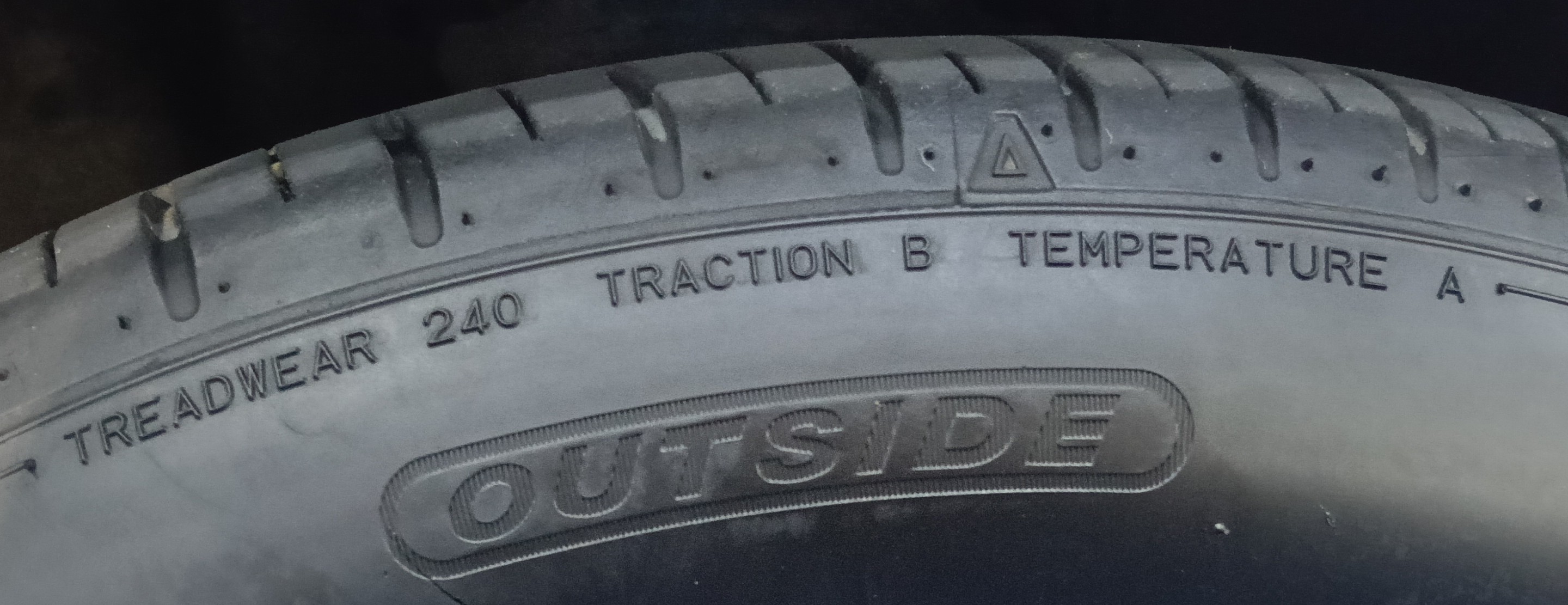
| UTQG Rating Value | Meaning |
|---|---|
| Treadwear | A number indicating the durability of the tire tread. Higher numbers mean longer lasting (but often less grip than lower numbers). |
| Traction (AA, A, B, C) | Ability to grip on wet roads. AA indicates best grip. |
| Temperature (A, B, C) | Resistance to heat accumulation while driving at high speeds. A indicates best heat resistance. |
Reading tire sidewall symbols is a basic skill everyone should have for safety and to save money from choosing the wrong tire specifications. If you want to see various car and tire models up close, come meet us at the Motor Expo from December 2-13, 2026.


Follow Motor Expo Club Network